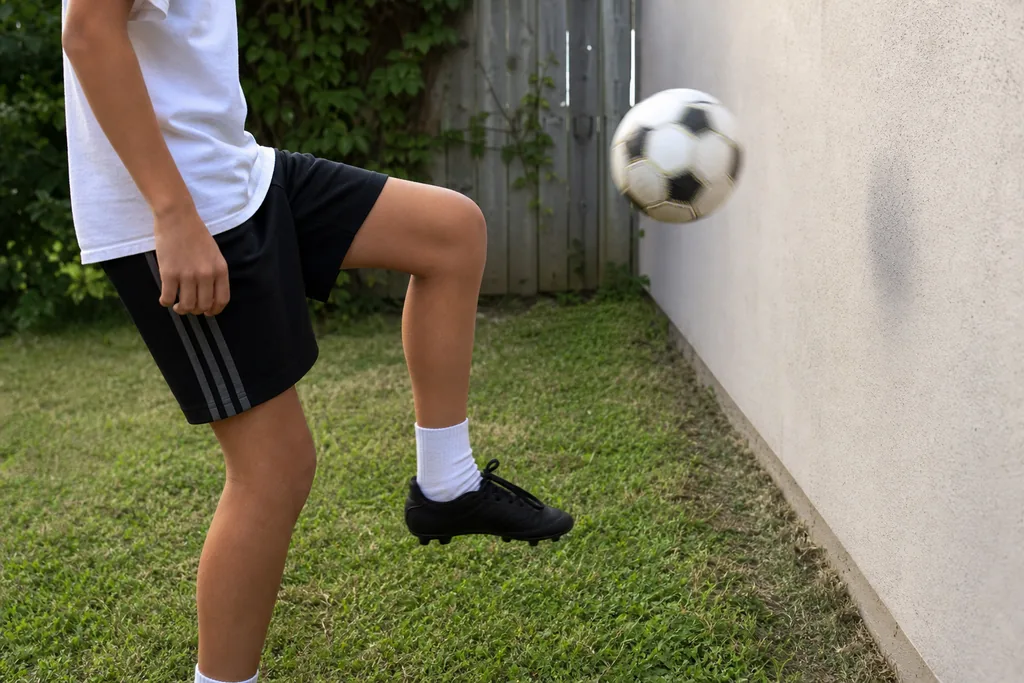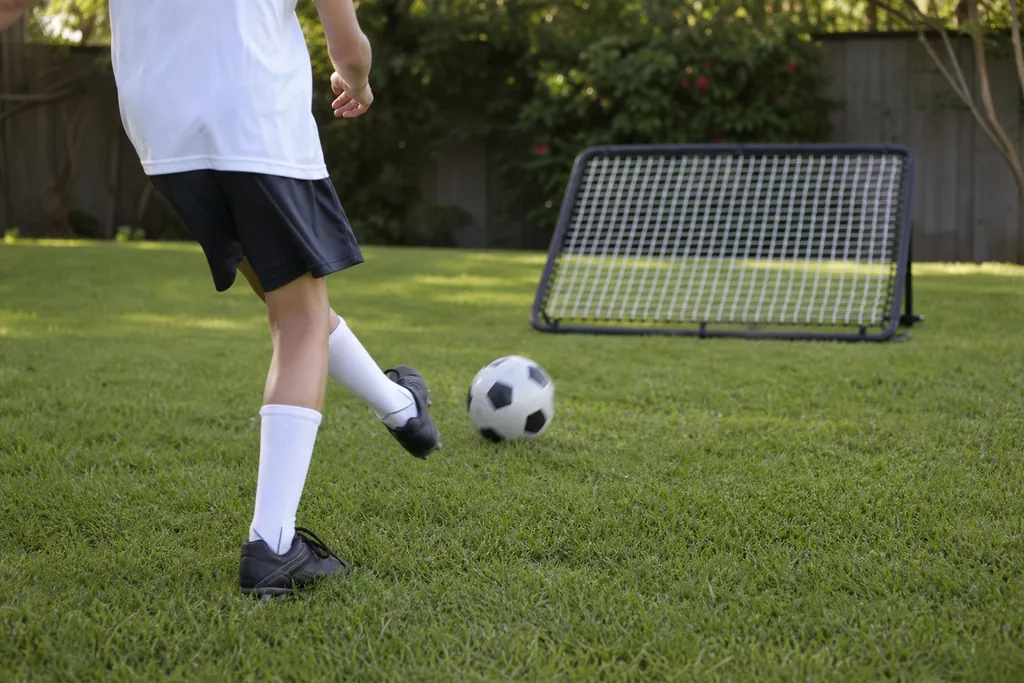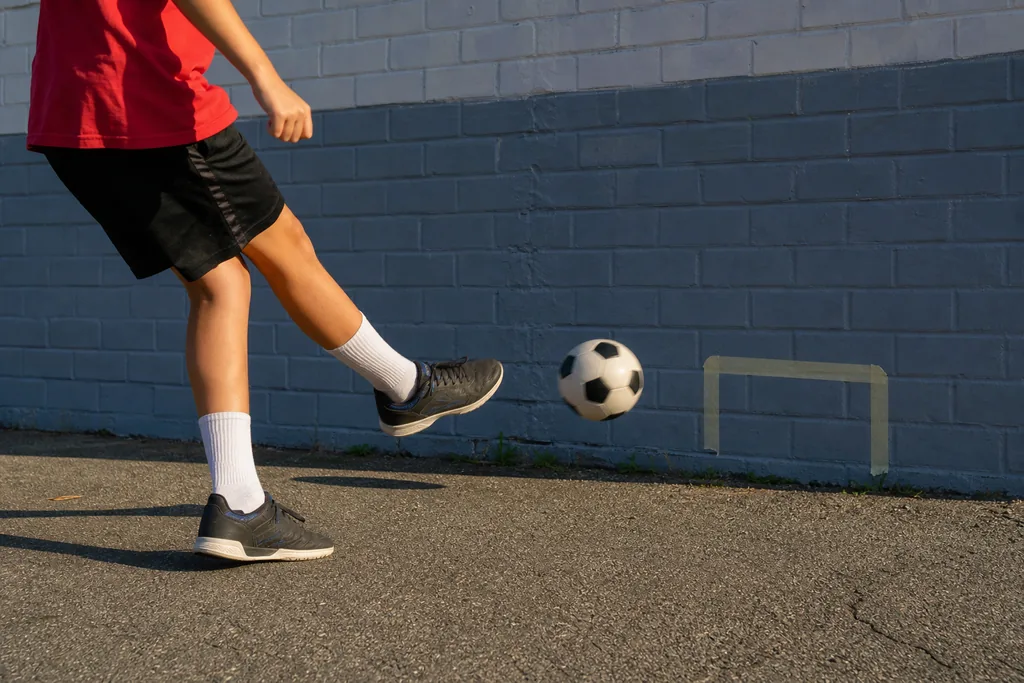
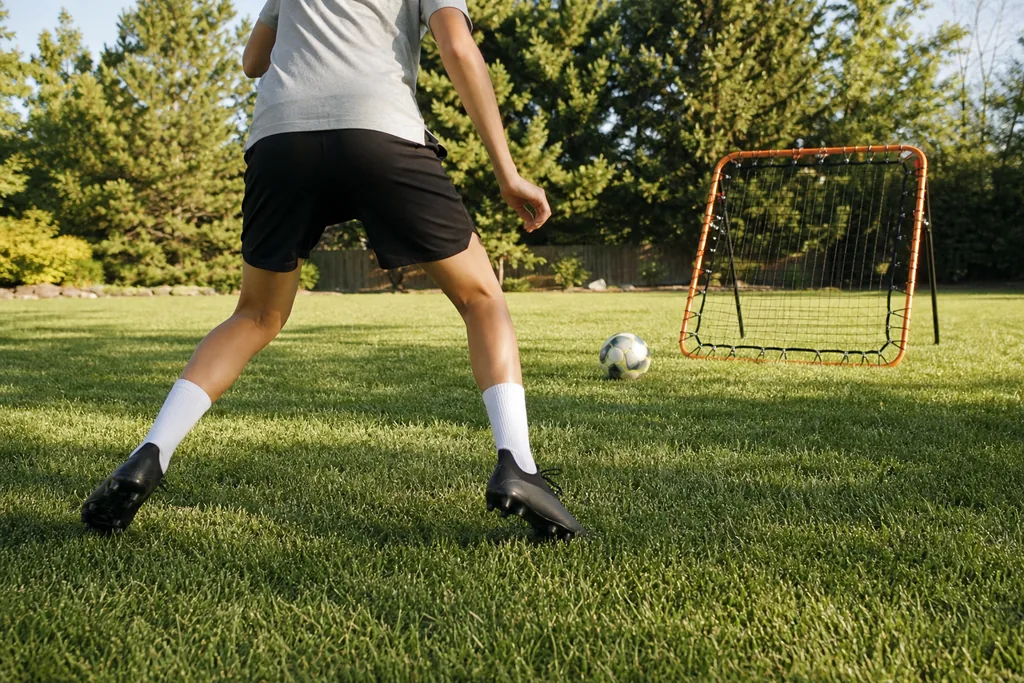
The Reaction and Recovery Challenge is an Advanced rebounder drill that improves reaction speed, balance and recovery footwork. You stand 5 to 8 feet from the rebounder and pass toward different safe areas of the rebound surface. Each return comes back at a new angle, so you react, control the ball before it gets away, reset and go again. You do three 45-second rounds. These recovery footwork tips focus on what your feet do between the pass and the touch.
Why recovery matters
Games are messy. Passes come in off target, and balls bounce in odd directions. The players who handle that well aren’t always the fastest. They’re the ones who recover their balance quickly and get their feet under them before the ball arrives. This drill trains exactly that moment, over and over.
The 45-second rounds ask a lot of your legs. Toward the end of each round they’ll feel heavy, and holding good balance while tired is something every game tests. Treat the last part of every round as the most important part.
Setting up safely
Place the rebounder on flat, open ground with plenty of space to both sides and behind you. Mark a spot 5 feet away and another at 8 feet. Only aim at the parts of the rebound surface that send the ball back into your clear space, never toward a fence, a window or a younger sibling’s toys. If a ball does get away, let it go and use a second one rather than chasing it into a risky spot.
Footwork to focus on
- Split step. As your pass hits the net, give a small hop and land on both feet. That gets you ready to move either way.
- Short, quick steps. Big strides are hard to stop. Little ones let you adjust.
- Get low. Bent knees help you change direction without wobbling.
- Control first, then reset. Stop the ball properly before you hurry back to your spot.
Common slip-ups
- Watching your own pass instead of the return.
- Standing flat-footed, then lunging when the ball goes wide.
- Taking a rushed touch that lets the ball escape.
- Aiming at the same spot every time, which takes away the reaction part.
Lowering the difficulty
Stand at 5 feet and pass gently, choosing just two areas of the net at first. Shorten each round to 30 seconds. Once you can control every return, add a third area. It also helps to call out where you’re aiming before each pass, so you know roughly where the ball should come back.
Raising the difficulty
- Move back to 8 feet so the angles spread wider.
- Use more areas of the net.
- Pass back after your control touch without stopping to reset.
- Count clean controls in each round and try to improve.
A sample session
- Warm up for 2 minutes with side shuffles and easy passes into the rebounder.
- Round one: 45 seconds at 5 feet, using two areas of the net.
- Rest until your breathing settles.
- Round two: 45 seconds, adding more areas.
- Round three: 45 seconds from farther back if you felt in control.
Pairs well with
To build the side-to-side movement first, try Lateral Movement and Pass, explained in Practice Notes: Lateral Movement and Pass. Our reaction and awareness page and the Quick Feet Challenge are also good next steps. For more rebounder passing, see the passing skills page.