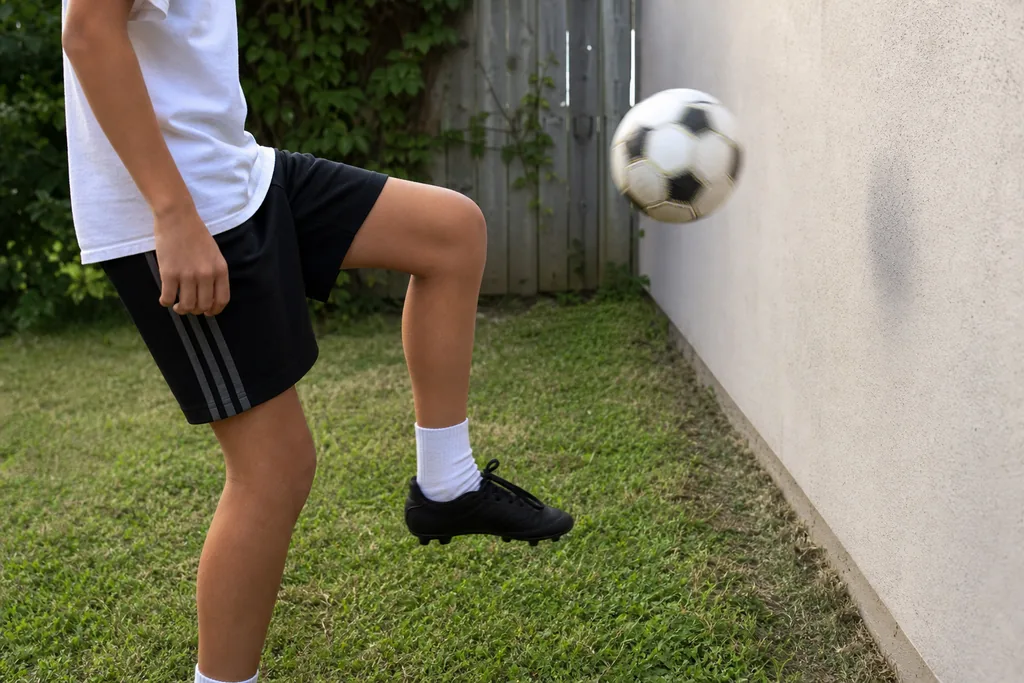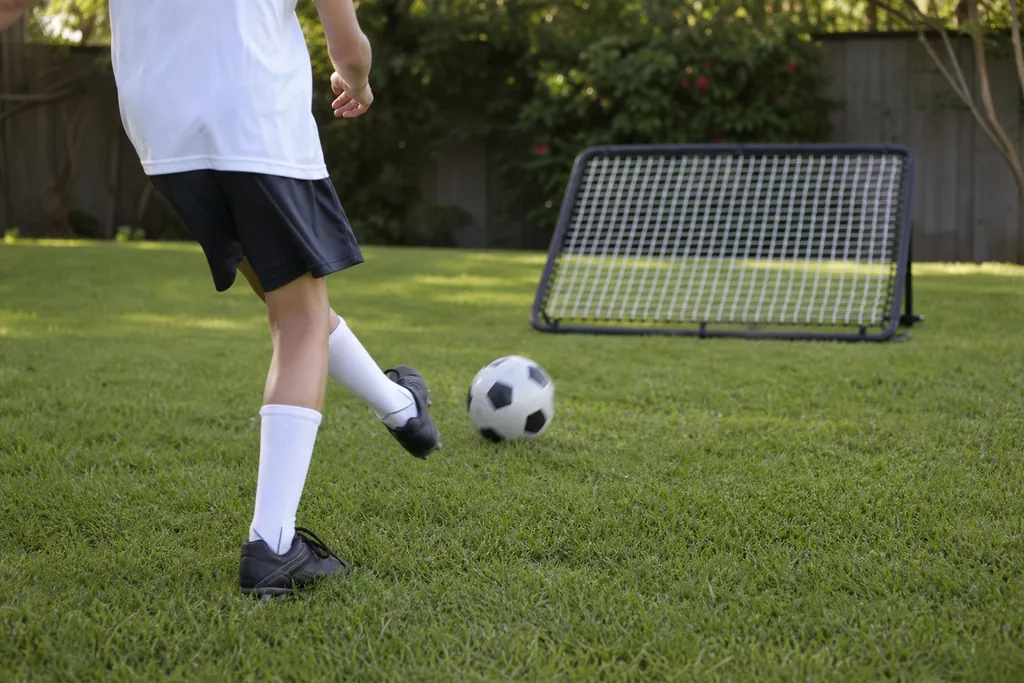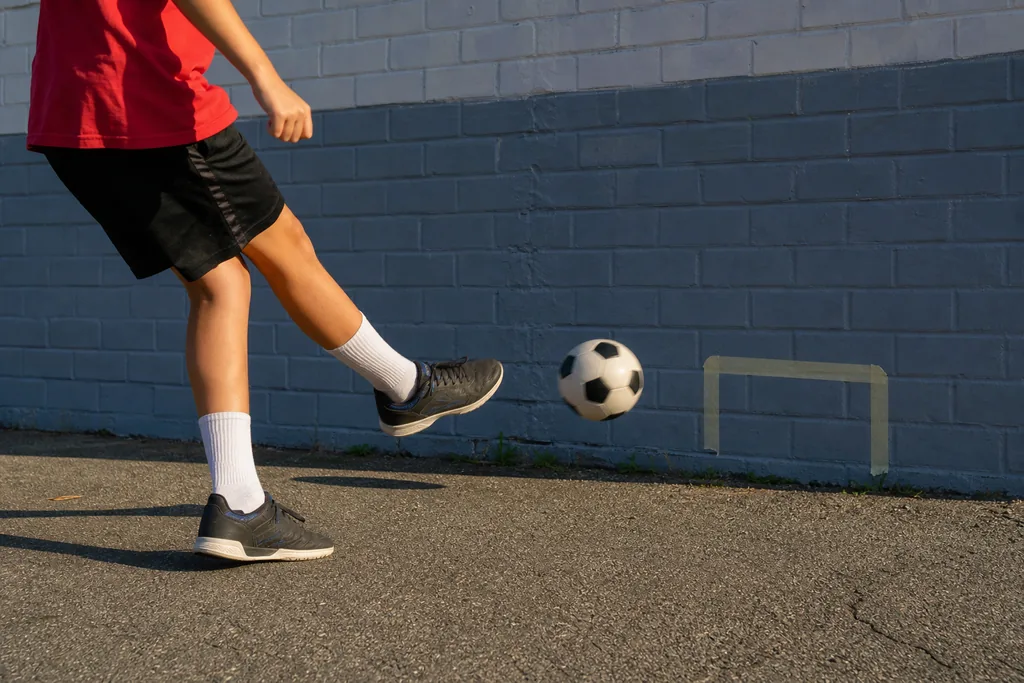
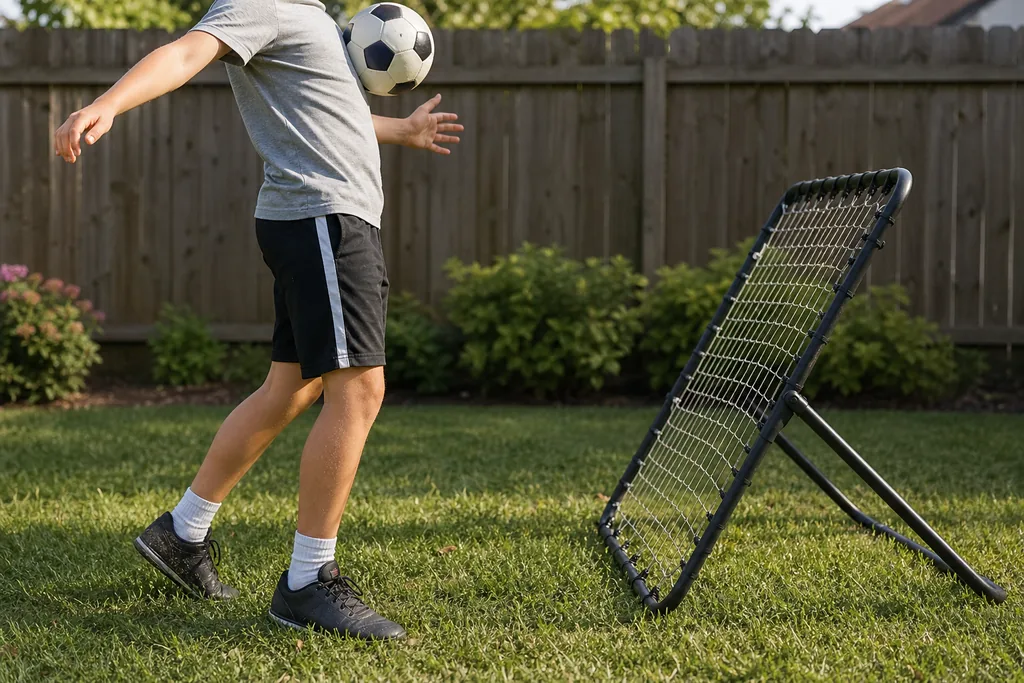
Chest Control and Volley is an Advanced rebounder drill that improves chest control, balance and volleys. You set the rebounder to return the ball around chest height, toss it in gently, cushion the return with your chest, let it drop to a comfortable height and volley it back. These chest control tips break each part down.
Why it’s worth the effort
Balls arrive at chest height more often than you might think: long passes, clearances, throw-ins and bouncing balls in a crowded box. A player who can bring those down cleanly keeps possession when others lose it. Adding the volley at the end trains the next step too, so control and finish become one movement.
Setting the angle
Start by adjusting the rebounder until a gentle toss comes back around chest height. Test it with a few tosses before you begin. If the ball comes back too high or too low, change the angle rather than how hard you throw, so every rep starts the same way.
Give yourself space as well. Clear the area around and behind you, since an awkward bounce off your chest can go in any direction, and practice somewhere a missed volley won’t hit anything breakable.
Cushioning with your chest
- Stand side-on enough to see the ball clearly.
- Puff your chest out slightly as the ball approaches, with your arms out wide for balance.
- Lean slightly backward, as the drill describes, so the ball pops up a little and drops in front of you.
- Breathe out as the ball arrives. It helps your chest relax and soften the contact.
Keep your arms away from the ball. Using them is a handball in a game, so don’t build the habit at home.
Letting it drop
Don’t rush to strike. Let the ball fall to a comfortable height, roughly between your knee and your waist. Watch it all the way down. The cleanest volleys happen when you’ve waited for the ball rather than swinging early.
The volley
Keep your eyes on the ball, lock your ankle and meet it with a short, controlled swing. Aim back into the center of the net. The goal is a clean, accurate contact, not a powerful one.
Common mistakes
- Throwing too hard, which sends the ball back too fast to control.
- Leaning forward, so the ball bounces off the chest and away.
- Striking before the ball has dropped.
- Swinging so hard that you lose balance.
A sample session
- Angle check: 3 or 4 test tosses to set the rebounder.
- Control only: 10 reps of chest control, catching the ball after it drops.
- Full drill: 10 reps of control and volley with your stronger foot, then 10 with the other.
- Finish: 5 reps counting only clean controls and on-target volleys.
Splitting the control from the volley at the start lets you fix one part before putting them together.
Make it easier or harder
To make it easier, let the ball bounce once after the chest control, then volley it. To make it harder, volley with your weaker foot, or control with your chest and strike with the first touch as it drops. If you’re not ready for chest height, start with Thigh Control and Pass, and see Practice Notes: Aerial Control and Wall Pass for related tips.