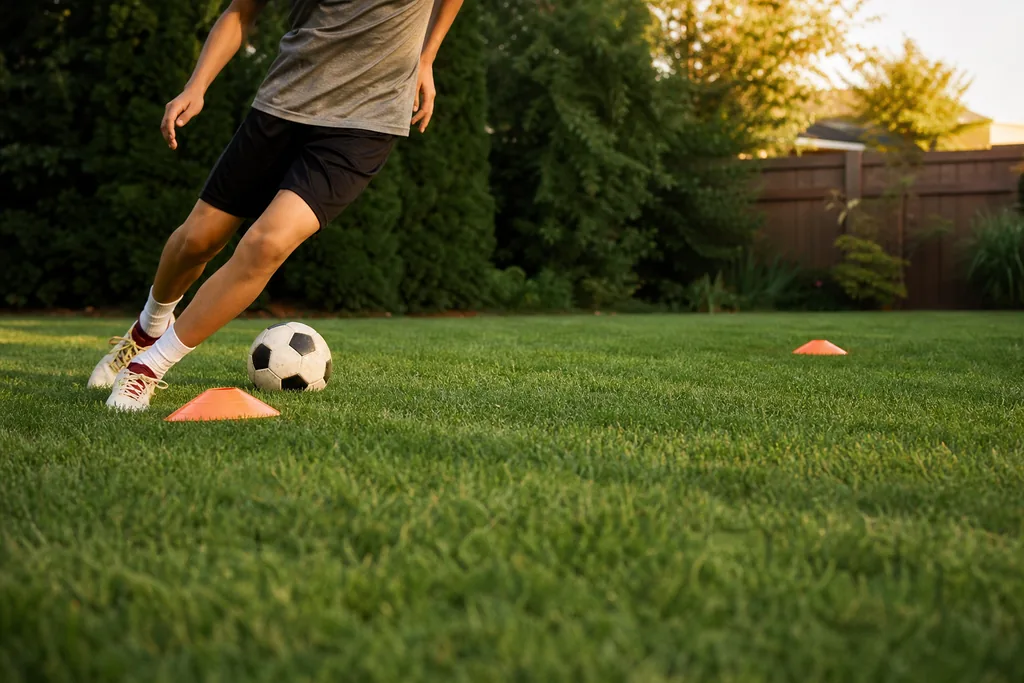
Figure 8 Dribbling is a Beginner drill that only needs two cones. The goal is to improve ball control, balance and turning in both directions. You set the cones about 3 to 4 yards apart, dribble around the first, cross through the middle and loop around the second to trace an 8. These figure 8 turning tips focus on the part that matters most: the turns.
Why a figure 8 works so well
An 8 makes you turn one way around the first cone and the other way around the second. That means you can’t hide your weaker side. Every lap trains a left turn and a right turn, with a short straight dribble through the middle to reset. It’s a small pattern, so you can fit it in a yard, a driveway or even a quiet park corner.
The repeated turns also help your balance. Each curve asks you to lean, slow down and push off again. After a few sessions, you’ll notice you can change direction without that clumsy stumble that comes from turning too fast.
Laying out the cones
Place two cones about 3 to 4 yards apart on flat, clear ground. Leave a couple of steps of space around each one so you can swing wide while you’re learning. Disc cones or tall cones both work. Our article on disc cones or tall cones explains the difference if you’re choosing.
What to focus on through the turns
- Slow down before the cone. Take a shorter touch as you arrive so the ball doesn’t run past.
- Turn with the inside first. The drill starts with the inside of the foot on the turns. It’s the easiest surface to steer with.
- Then try the outside. Once the inside feels smooth, switch to the outside for a new challenge.
- Bend your knees and lean in. A lower body is a more balanced body.
- Lift your head through the middle. That’s your moment to check where you’re heading.
Typical mistakes
- Turning wide and slow every time, so the 8 turns into a lazy oval.
- Only using your favorite foot on both turns.
- Speeding up so much that the ball gets away on the curve.
- Staring at the ball the whole lap and never looking up.
Easing it off
Walk through the pattern first, touching the ball with every step. You can also move the cones a little farther apart so the turns are gentler. If one direction is much harder, do a few extra laps that way before switching.
Turning it up
The drill’s own way to make it harder is to move the cones closer so the turns get tighter. You can also time five laps and try to beat that time without knocking a cone, or use only the outside of the foot. For a longer course with more turns, try Cone Weave Dribbling or Slalom Dribbling.
A sample session
- One slow lap, walking, to learn the shape.
- 5 figure 8s one way, using the inside of the foot.
- 5 figure 8s the other way, same surface.
- Repeat both sets with the outside of the foot.
- Move the cones a step closer and do one last set each way.
Related reading
The Around the World notes cover turning the ball around your own body, which is a nice partner to this drill. You’ll find more on our dribbling drills page, and the Cone Control Challenge mixes several cone patterns together.