Every drill in our library has a level: Beginner, Intermediate or Advanced. Picking soccer drills by level, instead of by age alone, is the simplest way to find practice that’s hard enough to help and easy enough to enjoy.
What the levels mean
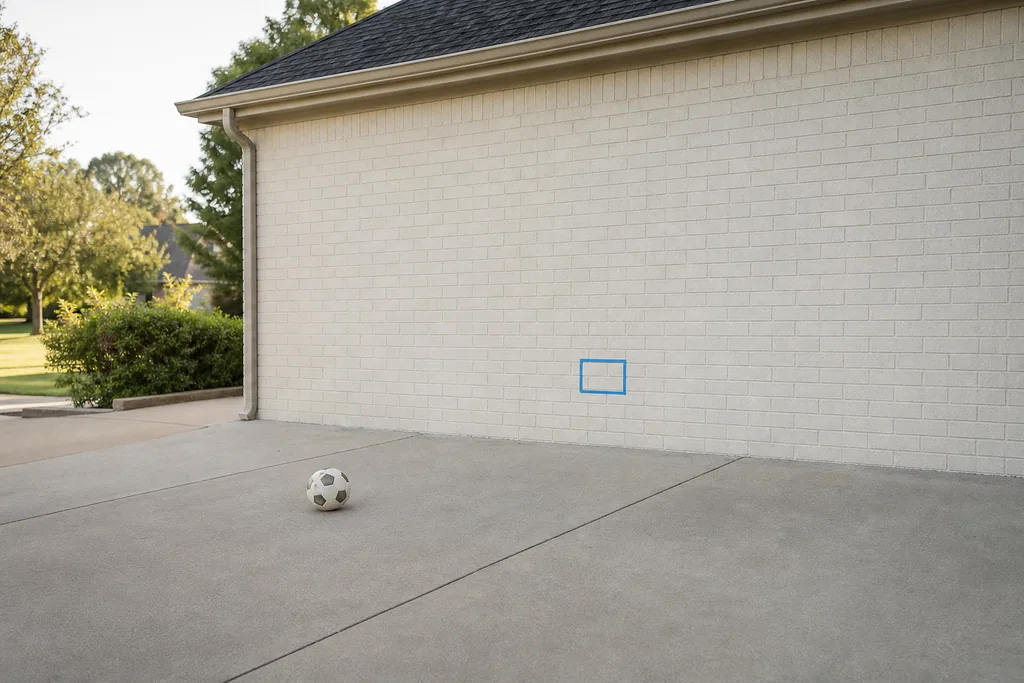
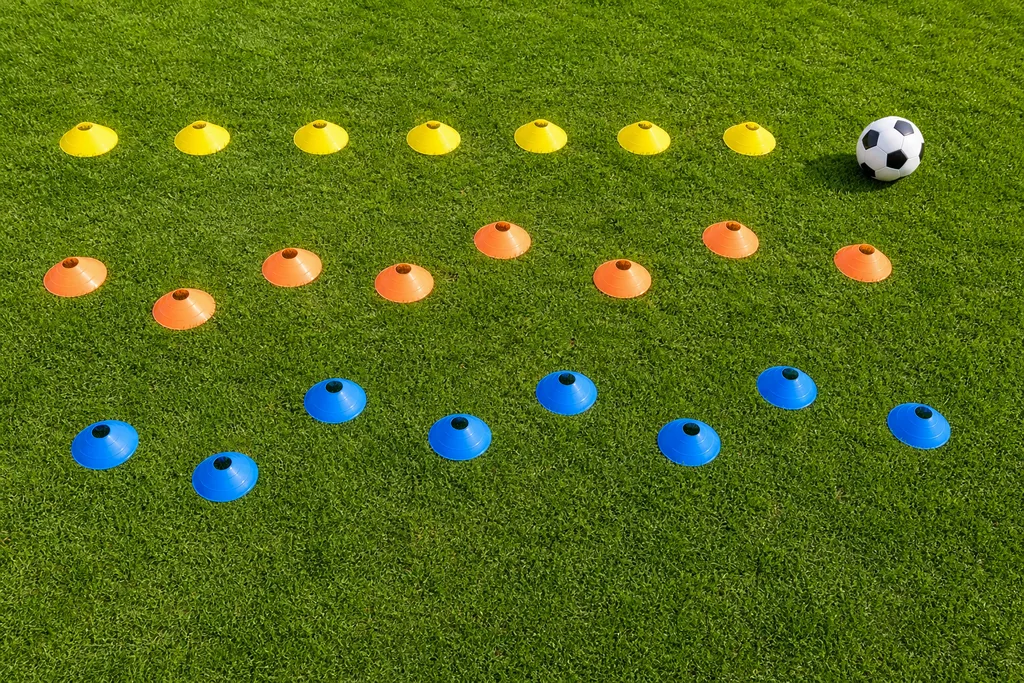
- Beginner drills work on one thing at a time, usually standing still or moving slowly. Think Toe Taps, Basic Two-Touch Wall Passing or Cone Dribbling.
- Intermediate drills add movement, an angle or a new surface of the foot. Examples are Lateral Movement Wall Passing, Stop and Go Dribbling and Jockeying Practice.
- Advanced drills put skills together and add speed or turns. Try Receive, Turn, and Pass, Rapid One-Touch Alternating Passes or Weak Foot Finishing.
Level matters more than age
A 9-year-old who has played for years may be ready for Intermediate drills. A 14-year-old who just joined a team may need Beginner drills first. Both are fine. The right level is the one where your child succeeds most of the time but still has to concentrate.
Age does matter for setup: younger kids may need shorter distances, a smaller ball and shorter sessions. The level tells you the drill. Age tells you how to adjust it.
When to move up
A simple rule: when your child can do a drill cleanly about eight times out of ten, at a steady pace, it’s time for something harder. You can make the same drill harder first, by speeding up, standing farther back or using the weaker foot. Then move to the next level.
When to step back
If a drill keeps falling apart, it’s too hard for now, and that’s normal. Go back a level for a week. Confidence grows from success, and a few clean sessions at an easier level often make the harder one click sooner than forcing it.
Make one drill easier or harder
Every drill can move up or down a step without changing to a new one. Our drill steps already give a range for you to work within.
- Distance: Basic Two-Touch Wall Passing starts 5 to 8 feet from the wall. Closer is easier, farther is harder.
- Speed: go slowly until the touch is clean, then speed up.
- Feet: switch to the weaker foot for one round.
- Touches: go from two touches to one, as in One-Touch Wall Passing.
Changing one thing at a time keeps the drill challenging without making it frustrating.
A sample week that mixes levels
For a player who is mostly at Beginner level, a week might look like this:
- Two sessions of a Beginner passing drill against the wall.
- One session of a Beginner dribbling drill with cones.
- One session of an Intermediate drill, done slowly, as a stretch.
As the stretch drill starts to feel comfortable, it becomes the main drill, and the next one up becomes the new stretch. Progress happens one drill at a time.
Use the filters
Our drill library has 53 drills that you can filter by skill, equipment and level. Pick the level, pick the equipment you have at home, and you’ll get a short list to choose from. Mix levels across the week: one or two drills at the current level, and one at the next level up to stretch toward.