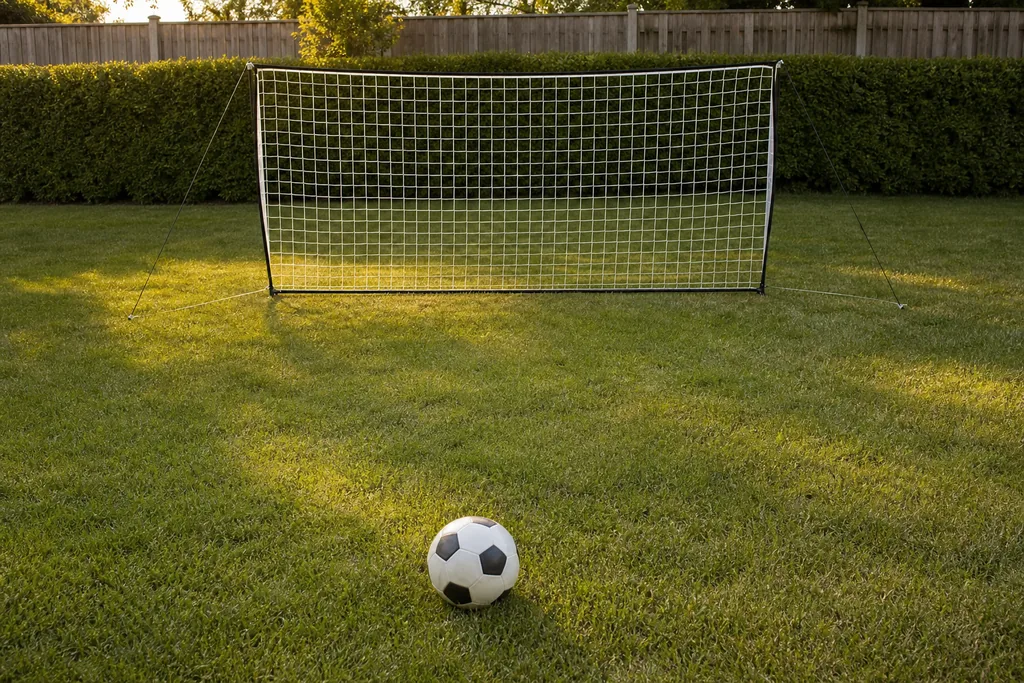
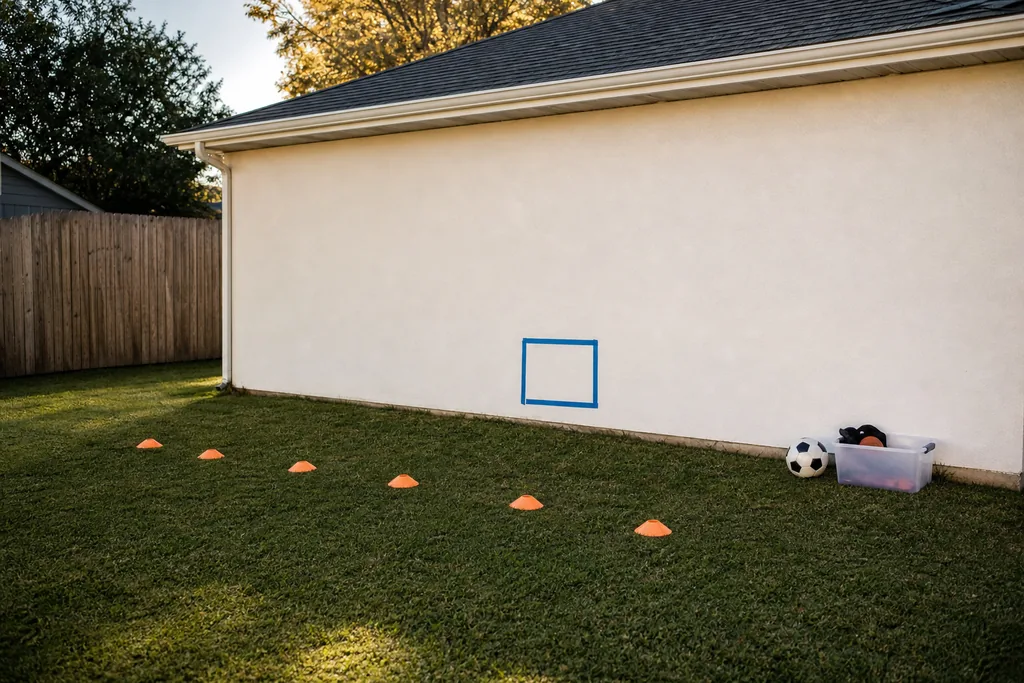
The easiest practice to skip is the one that takes twenty minutes to set up. A home soccer training area that’s always ready removes that excuse. It doesn’t need to be big or fancy. It needs a wall, some flat ground and a place for the gear.
Choose the spot
Any solid wall without windows nearby will do: the garage, the side of the house or a dedicated rebound wall. Pair it with a flat, clear patch of ground in front, a few steps deep at least. Check that there are no windows or anything breakable near the wall, and that a missed ball can’t roll into the street. Our safety check for home training walks through it step by step.
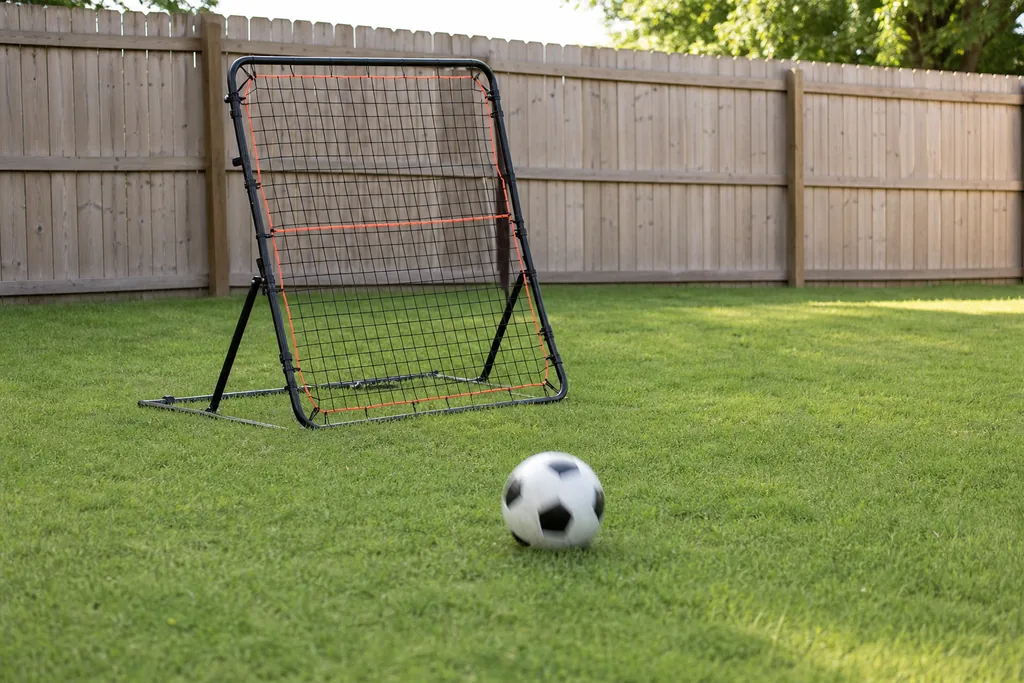
No good wall? A soccer rebounder is one of the most versatile pieces of equipment for practicing alone, and it can go anywhere in the yard.
The basic kit
- A soccer ball that’s the right size for the player and properly pumped up.
- A wall or a rebounder. See our guide to choosing a rebounder.
- A few cones. Low disc cones like the Kwik Goal Mini Disc Cone Kit are enough for most dribbling drills.
- Tape or chalk for the wall target.
That’s it. Everything else is optional.
Mark it out
A few marks turn a wall into a training station.
- Tape a target low on the wall, about 2 feet wide, like the one in the Wall Target Accuracy Challenge. A smaller target makes passing drills harder.
- Mark standing lines on the ground with chalk. Many of our wall drills start 5 to 8 feet from the wall, so mark those distances once and you won’t need to measure again.
- Leave a clear lane to one side for dribbling drills and cone work.
Keep it ready
Store the ball, cones, chalk and a small pump in one bin by the door or in the garage, close to the wall. When a session takes one minute to set up, it happens far more often.
Grass, concrete or turf?
The surface in front of your wall changes how practice feels.
- Concrete gives a fast, even bounce and works in most weather once it’s dry. It’s hard on falls, so it suits passing and footwork more than tackling.
- Grass is softer and closer to a real field, but uneven patches make the ball hop. Mow it short and fill any holes.
- Artificial turf or an outdoor mat gives a steady surface on a small patch, if you already have one.
Use whatever you have. Just make sure it’s flat, dry and clear before you start.
Be a good neighbor
A ball hitting a wall over and over can be loud. Keep sessions to reasonable hours, especially early in the morning and late in the evening. If your corner is near a fence, aim away from it so balls don’t keep landing in the neighbor’s yard. A friendly word with the neighbors before you start goes a long way.
Make it a habit
Post the week’s plan where you’ll see it, on the garage door or the fridge. Pick a weekly challenge and tick off the sessions. Start with Basic Two-Touch Wall Passing on day one, and your corner is already doing its job.