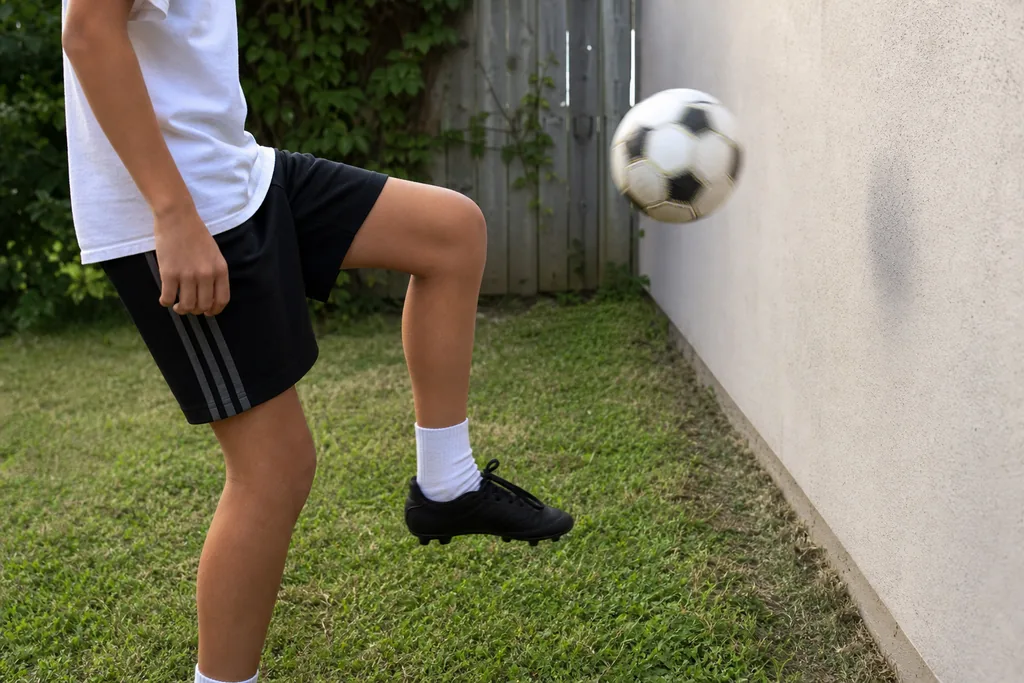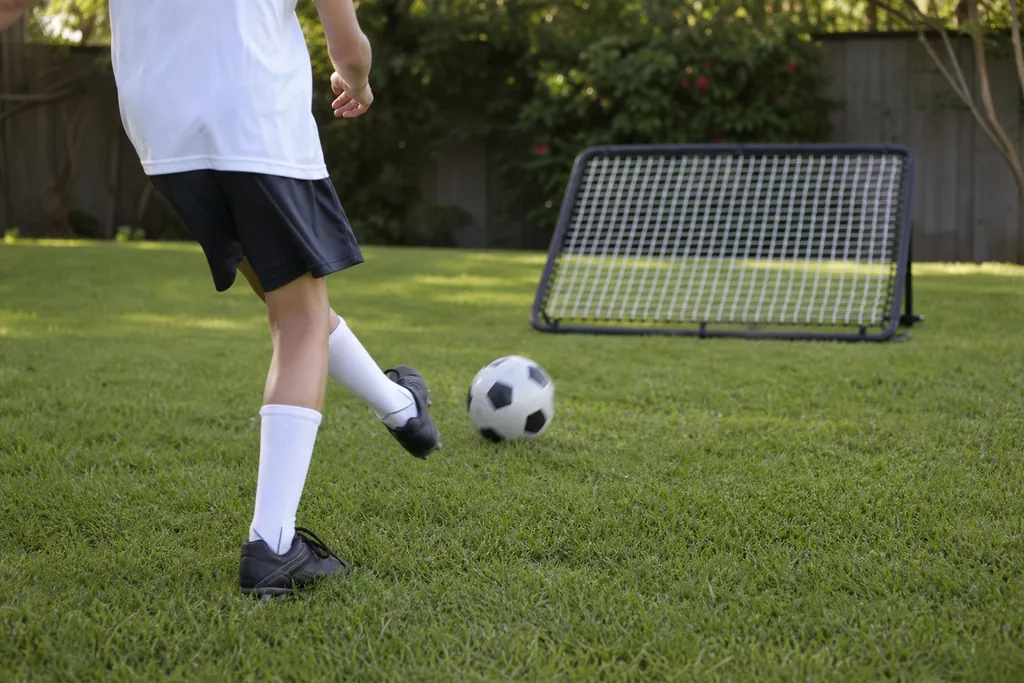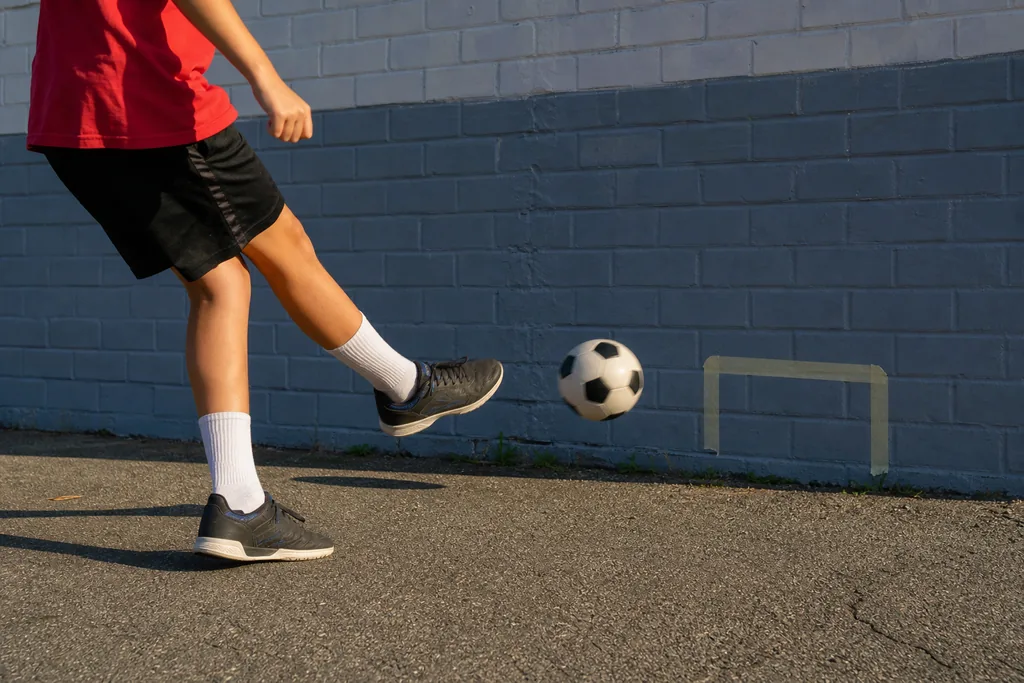
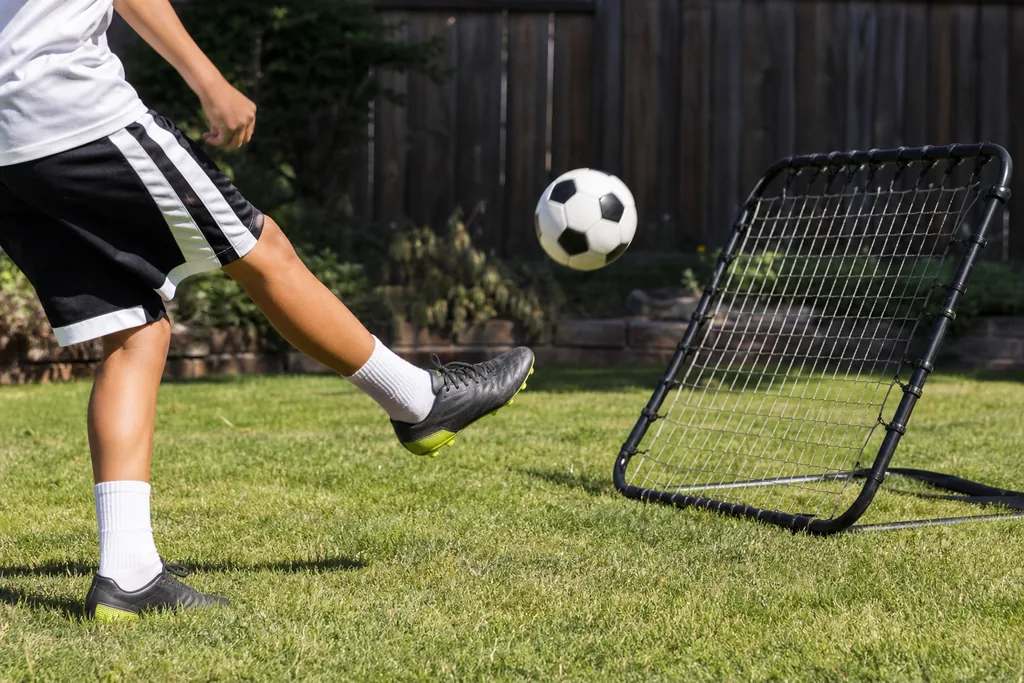
Controlled Volley Returns is an Intermediate rebounder drill that improves volley timing and coordination. You set the rebounder to return balls in the air, start with a gentle toss or pass, track the ball and volley it back with the inside of your foot before it touches the ground. Ten controlled volleys with each foot. The key word is controlled.
Why volley timing matters
A volley is all about meeting the ball at the right moment. Too early and you swing at air. Too late and the ball hits your shin or bounces first. This drill gives you a steady stream of balls in the air, so you can practice the timing over and over until it feels natural.
Good volley timing also helps with other skills. The same tracking you practice here makes it easier to judge long passes, headers and bouncing balls in games.
Setting the angle
Angle the rebounder so the ball comes back in a gentle arc, landing a step or two in front of you if you let it. Test it with a couple of tosses first. A softer, higher arc is easier to time than a fast, flat one, so start there.
What to focus on
- Track the ball from the net to your foot. Your eyes do most of the work in a volley.
- Use the inside of the foot. It’s the biggest surface and gives you the most control, which is why the drill asks for it.
- Short swing. A small, firm contact is more accurate than a big kick.
- Balance first. Get your standing foot set before the ball arrives, with a slight bend in the knee.
- Aim at the center. A volley into the middle of the net gives you a predictable return for the next one.
Common mistakes
- Starting too hard, so the returns come back too fast to time.
- Swinging with the laces when the drill asks for the inside of the foot.
- Watching where you want the ball to go instead of watching the ball.
- Leaning back, which sends volleys high over the net.
Make it easier
Let the ball bounce once and volley it on the way down, as a half volley. Or catch every other return and toss it again, so each volley starts fresh. When most of your half volleys are clean, go back to full volleys.
Make it harder
- Volley straight back without catching, keeping a rally going.
- Alternate feet on every return.
- Count how many volleys in a row you can keep going.
- Try the Advanced drills Volley Off a Rebounder and Chest Control and Volley.
A sample session
- Angle check: a few tosses to get a soft, steady arc.
- Half volleys: 10 with each foot, letting the ball bounce once.
- Full volleys: the drill’s 10 controlled volleys with each foot.
- Rally: see how many volleys in a row you can keep going.
Write down your best rally. It’s a simple way to see your timing improve from week to week.
Related notes
For more practice with balls in the air, see Practice Notes: Chest Control and Volley and Practice Notes: Aerial Control and Wall Pass. Our guide to choosing a rebounder explains which types can return the ball in the air.