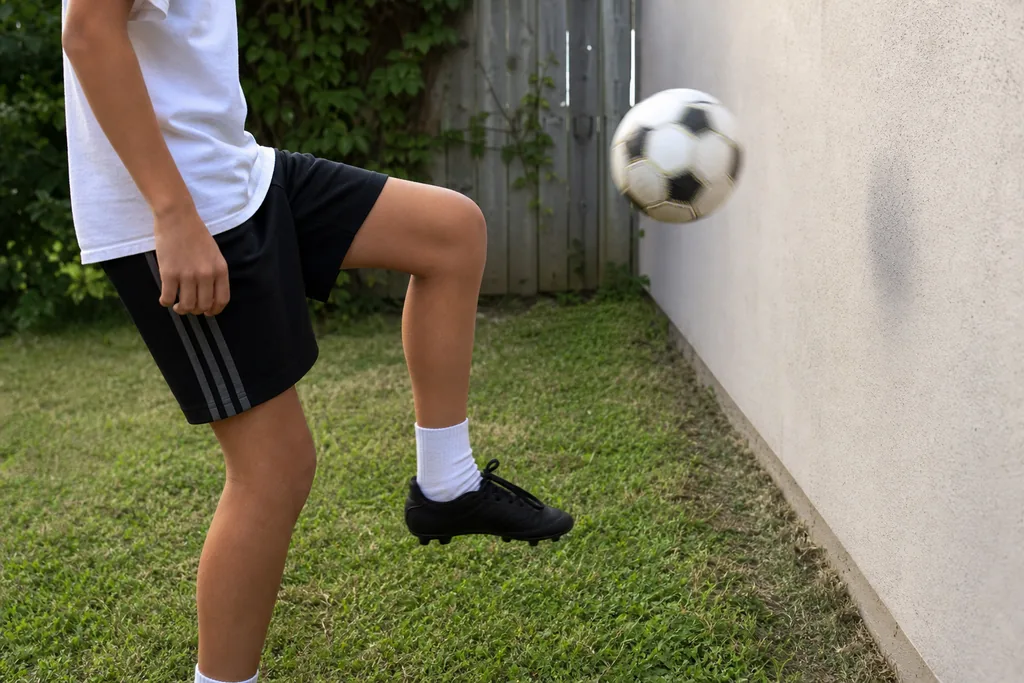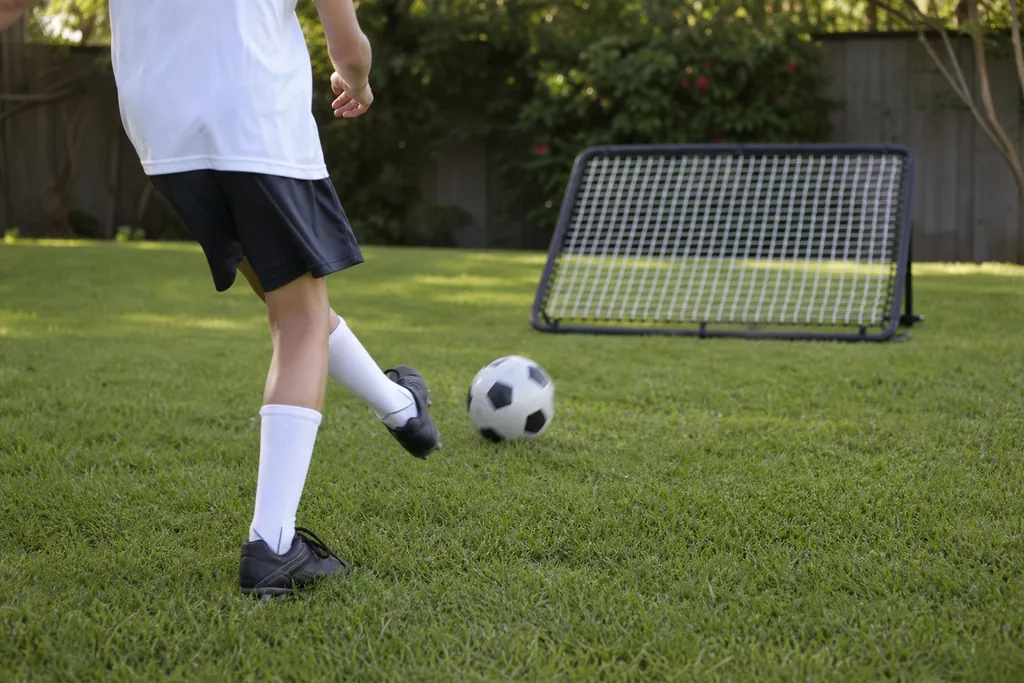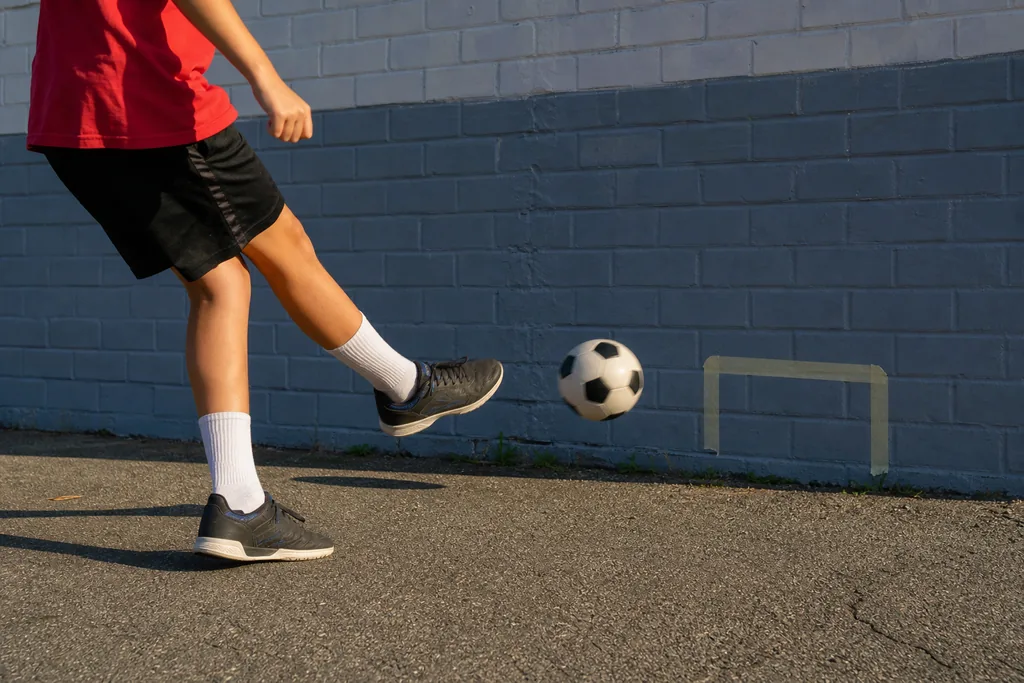
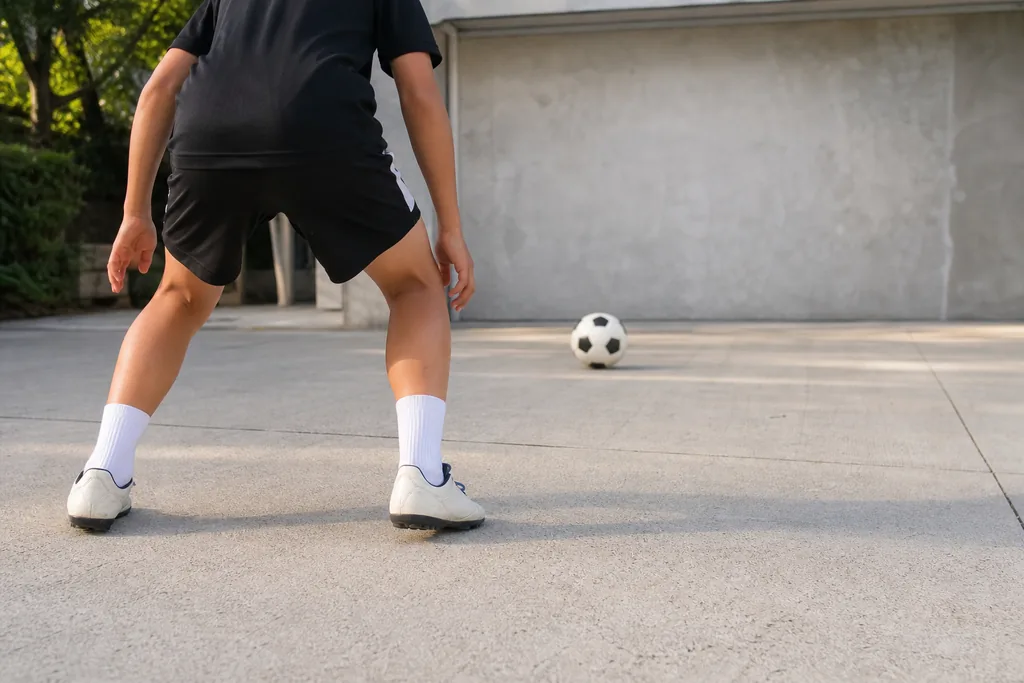
The Defensive Reaction Drill is an Advanced defending drill for a wall or a rebounder. Its goal is to improve reaction speed and quick decisions when the ball changes direction. You stand about 5 yards away in your defending stance, kick the ball in at a different angle and speed each time, then step across to block or control whatever comes back. These defensive reaction tips will help you get more out of every set.
Why reacting matters more than guessing
Defenders who guess get beaten. The ball deflects, an attacker cuts inside, a pass takes a strange bounce. The player who stays balanced and moves only once they see the ball is the one who gets there first. This drill builds that patience, because you never know exactly where the return will go, even though you kicked it yourself.
That surprise is the whole point. A clean, predictable rebound would let you relax. Changing your angle and pace keeps your feet honest.
Getting the space ready
A sturdy wall with clear space around you works, as does a rebounder. Keep well away from windows, since some returns will fly off in odd directions. Mark your spot about 5 yards back with a cone or a line of tape so you start from the same place every time.
Check the ground to your left and right too. You’ll be stepping sideways quickly, and a hose or a stray toy is easy to trip over.
Habits that speed you up
- Low and ready. Knees bent, weight on the front of your feet, arms loose for balance.
- Watch the ball off the surface. Your first clue is the moment it leaves the wall or net, so lock your eyes there.
- Push off the far foot. To move right, drive off your left foot. It gets you going faster than a lazy first step.
- Get your body behind it. A block with your whole body in line is safer than a stretched toe.
- Reset before the next kick. The drill asks you to get back into your stance each time. Treat that reset as part of the rep.
Where players go wrong
- Kicking every ball the same way, which turns it into a passing drill.
- Standing tall, so the first move is a slow drop down before you can go anywhere.
- Crossing your feet when stepping sideways and losing balance.
- Lunging with one leg instead of moving your body.
- Skipping the reset and starting the next kick from wherever you ended up.
Making it easier
If returns keep getting past you, slow down your kicks and keep the angles small. A softer ball gives you an extra moment to see it and move. It’s fine to stand a bit farther back while you learn the footwork. The shadow defending drill is a good partner here, since it trains the stance without a ball flying at you.
Making it harder
The drill’s own step for more challenge is to move a little closer. Less distance means less time. You can also mix in more extreme angles, or try to control every return cleanly instead of only blocking it. For a different kind of rebounder pressure, look at the Reaction and Recovery Challenge.
A sample session
- Warm up with a minute of side shuffles in your stance.
- Set 1: 10 reps with gentle kicks and medium angles. Focus on the reset.
- Set 2: 10 reps with mixed pace. Try to block or control each one.
- Set 3: 10 reps from a step closer, if the first two sets felt steady.
- Finish by noting how many of the 30 returns you reached cleanly.
Keep building your defending
Browse all our defending drills, or pair this with the notes on cone weaving for defenders and jockeying practice. The Defenders Footwork Challenge puts several of these together.