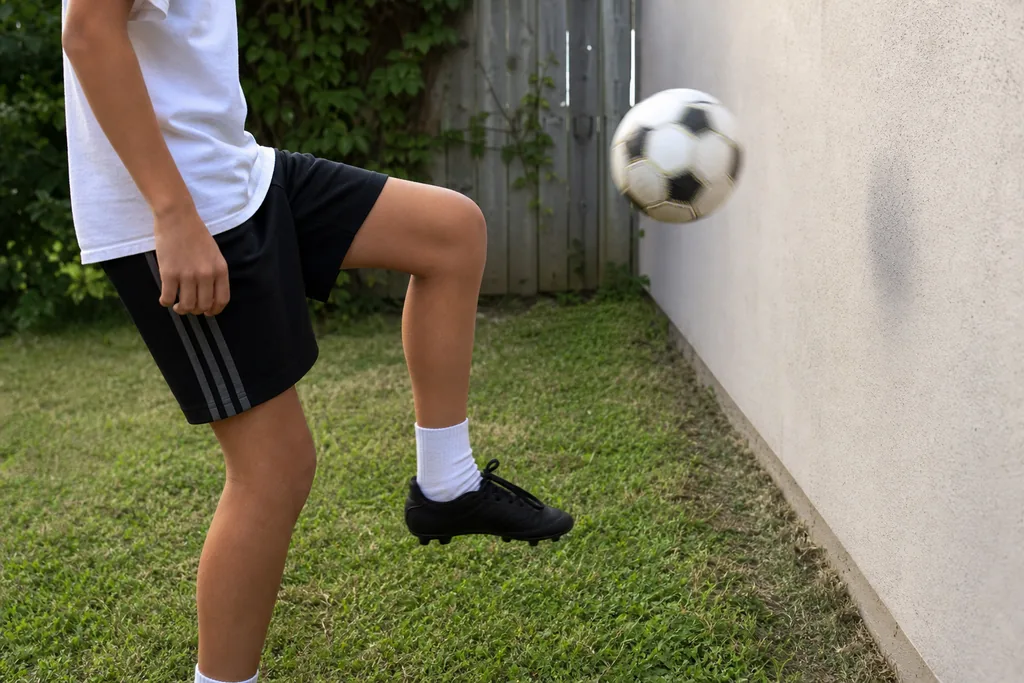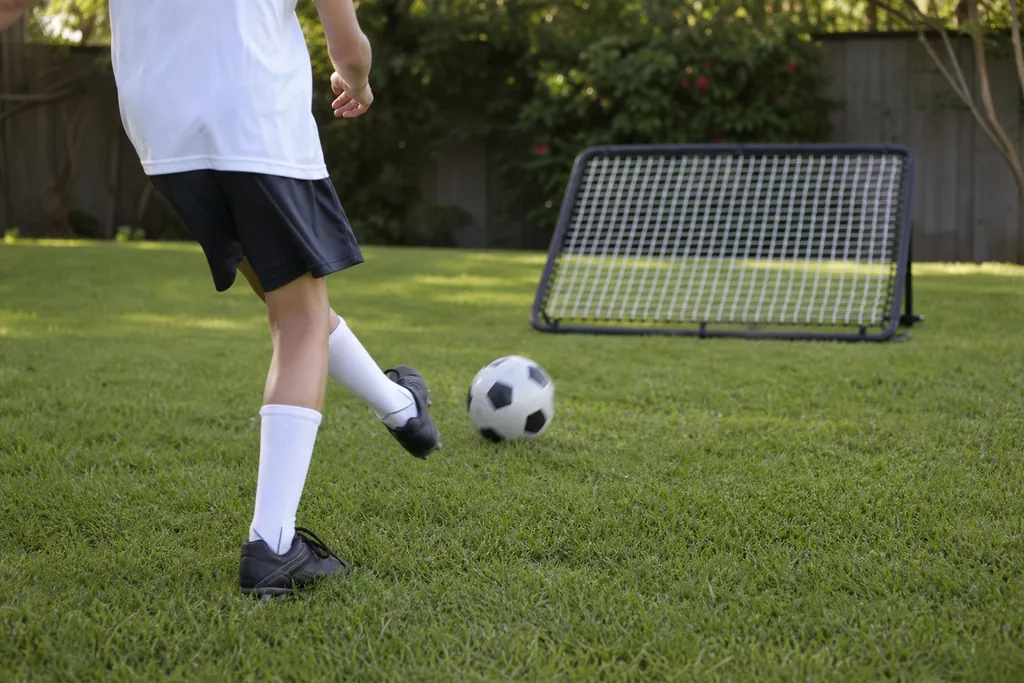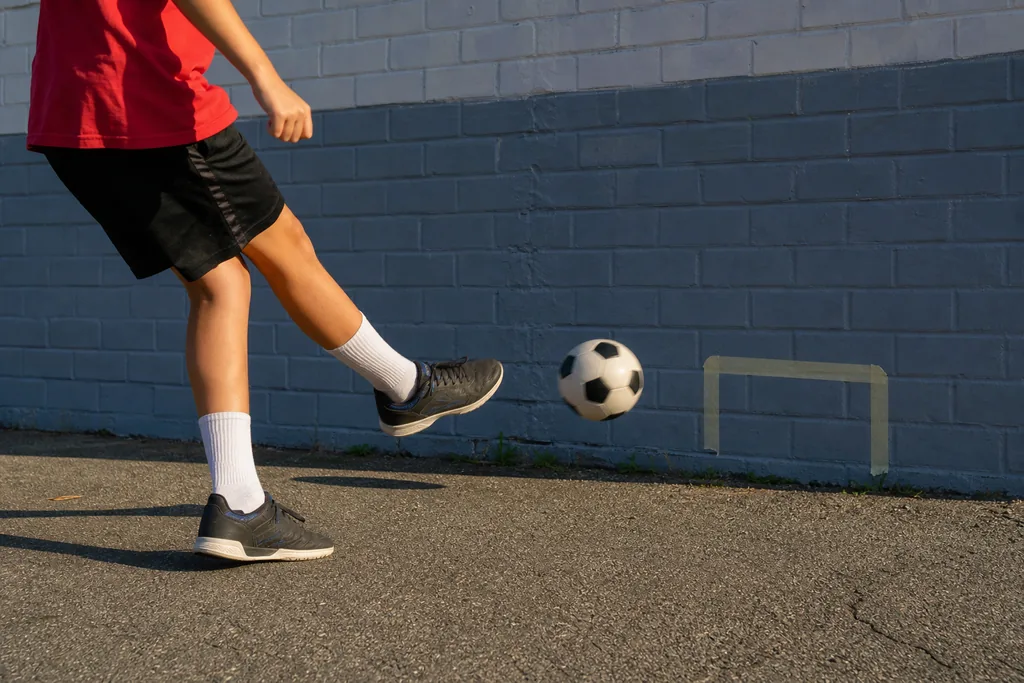

Jockeying Practice is an Intermediate defending drill with two cones. Its goal is to develop the positioning, balance and patience to guide an attacker. You set the cones about 10 yards apart to make a lane, stand side-on at one end and move backward and sideways down the lane as if an attacker were dribbling at you. These jockeying tips will help you defend with your feet and your head, not just your legs.
Why jockeying matters
Diving in for the ball is the quickest way to get beaten. Jockeying means staying close enough to bother the attacker while waiting for a better moment, like a heavy touch. It also lets you steer the attacker toward the sideline or their weaker foot. Practicing alone sounds odd for defending, but the footwork and patience are things you can build without anyone else.
Think of it as learning the dance steps before the music starts. When a real attacker comes at you, your body already knows how to stay low, move backward and switch sides. That leaves your mind free to read the ball and pick your moment.
Setting the lane
Place two cones about 10 yards apart on flat, even ground. Because you’ll be moving backward, check that the space behind you is flat and clear before you start each lane. Walk the lane once to look for holes, sprinklers or toys.
Points to focus on
- Side-on stance. One foot ahead of the other, knees bent, weight on the balls of your feet.
- About an arm’s length away. Picture the attacker and keep that gap as you move.
- Eyes on the ball. Attackers fake with their hips and shoulders. The ball doesn’t lie.
- Small, quick steps. Shuffle rather than cross your feet.
- Switch the front foot. Every few steps, turn your hips the other way, as if the attacker changed direction.
Mistakes that give the attacker an edge
- Standing square, which leaves a gap between your feet.
- Backing off too far so the imaginary attacker has free space.
- Getting tall and stiff as you tire.
- Lunging forward too early instead of finishing each lane with a quick, controlled step.
Easier ways in
Walk the lane slowly before you shuffle it. Keep the same front foot for a whole lane, then switch on the next one. If your balance wobbles, shorten the lane for a few runs. Some players find it helps to hold their arms slightly out from the body, like a tightrope walker, until the stance feels natural. The Shadow Defending drill trains a similar stance and is a good warm-up.
Harder versions
- Move faster down the lane while keeping your stance low.
- Switch your front foot more often.
- Add a sudden forward step in the middle of the lane, then recover back into the jockey.
- Ask a family member to dribble toward you slowly once your footwork is steady.
A sample session
- Warm up with a minute of side shuffles.
- Lanes 1 and 2: slow pace, one switch of the front foot each.
- Lanes 3 and 4: steady pace, switching every few steps.
- Lanes 5 and 6: quicker pace, finishing each one with a quick step forward, as if to win the ball.
More defending notes
Read the notes on the Defensive Reaction Drill and shadow defending. Browse our defending drills, and when you want a full workout try the One-on-One Defending Challenge.