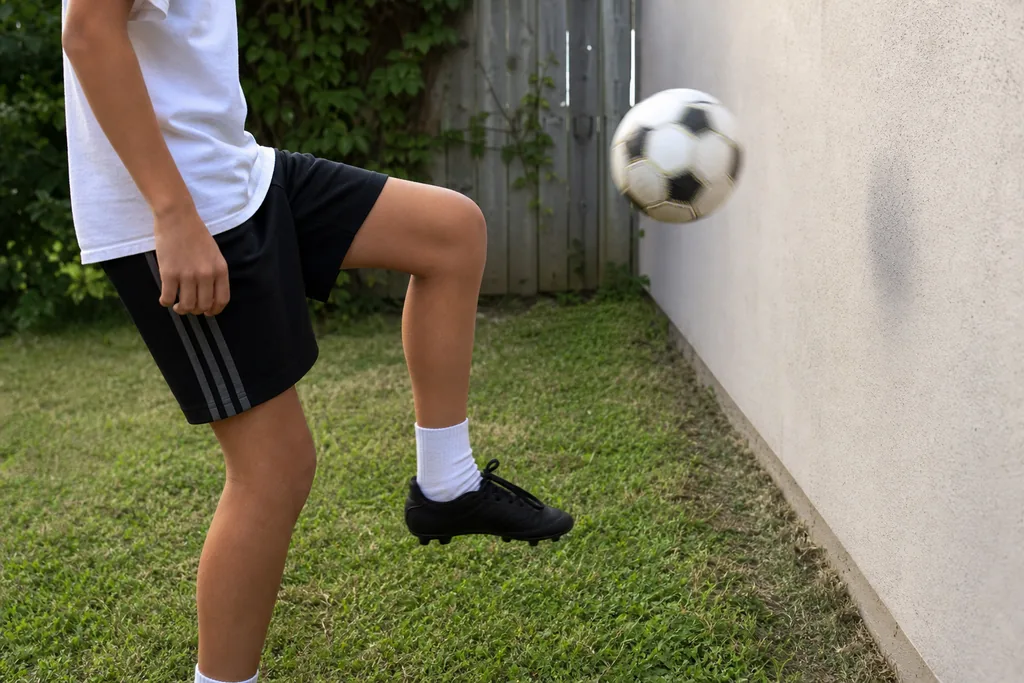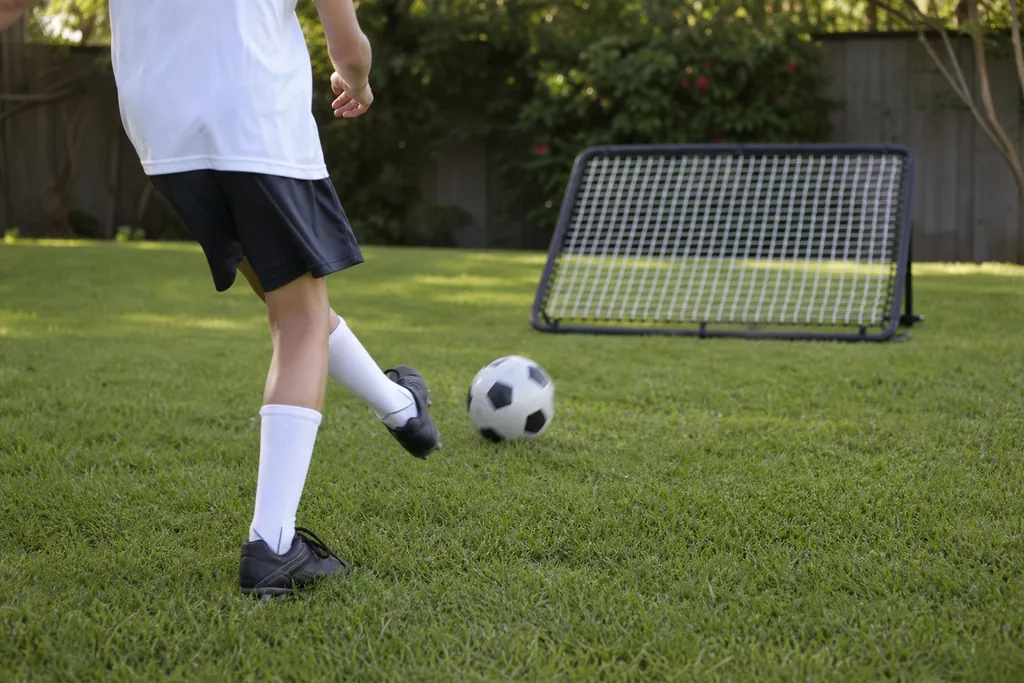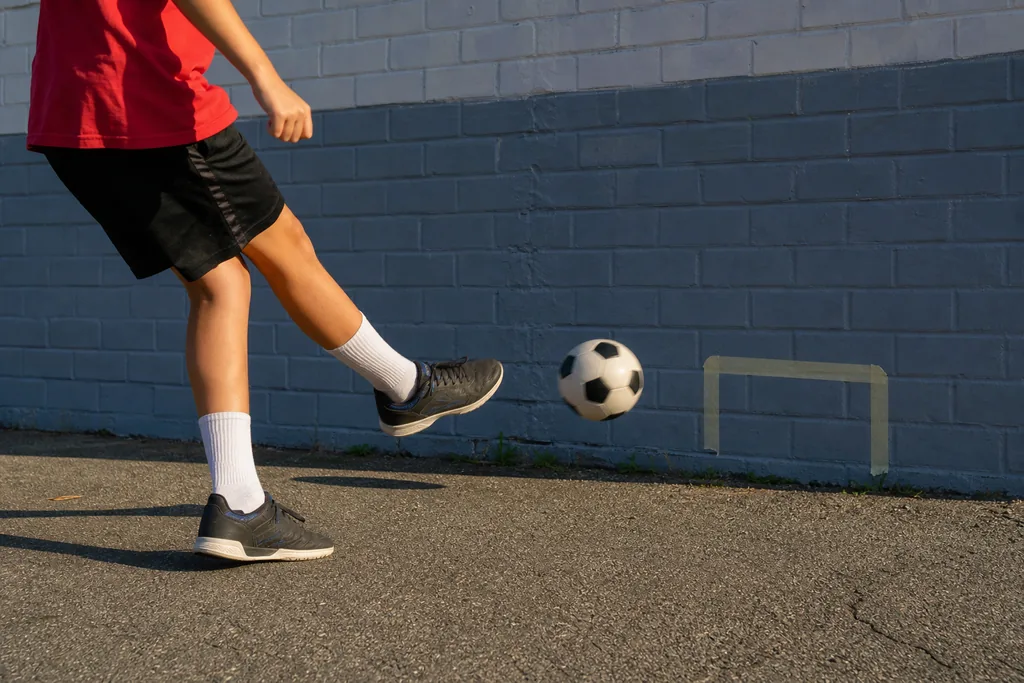
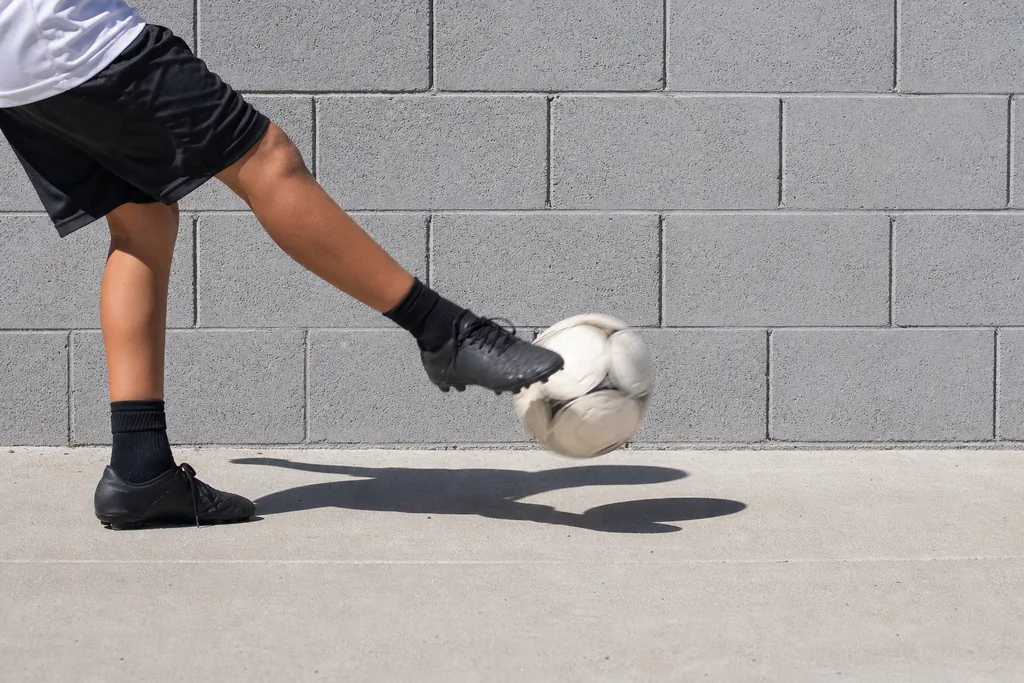
Driven Wall Passes is an Intermediate passing drill for a wall. Its goal is to improve passing power and accuracy. You stand 10 to 15 feet from a sturdy wall, plant beside the ball, strike through the center with your laces, keep it low and control the rebound. Good driven pass technique lets you move the ball a long way quickly without lifting it off the ground.
Why a driven pass is worth learning
Short passes with the inside of the foot are the backbone of the game. But sometimes a teammate is farther away, or a gap is closing fast, and a soft pass won’t get there in time. A driven pass covers the distance with pace and stays on the grass, which makes it easier for the other player to control. Practicing it against a wall means every strike gets an instant, honest answer. A pass that rises or curls tells you something went wrong with your plant foot or contact point.
Setting up with care
Pick a solid wall and a clear area. Powerful rebounds can be hazardous, so nobody should be standing nearby, and nothing breakable should be behind you or to the sides. Start at the 10-foot end of the range. Firm passes from close up come back quickly, so you’ll need a moment to get used to the pace.
Key points for each strike
- Plant beside the ball. Your non-kicking foot goes next to it, not behind it, pointing where you want the pass to go.
- Toe down, ankle firm. Pointing your toe down lets your laces meet the ball cleanly.
- Hit the middle. Striking through the center keeps the ball low. Hitting underneath lifts it.
- Short, firm follow-through. Let your kicking foot carry on toward the wall, then land.
- Be ready for the return. Get your body in line and cushion the rebound before it gets past you.
Common slip-ups
- Planting too far behind the ball, which makes you lean back and pop it up.
- Using a big, wild swing instead of a compact, firm one.
- Forgetting the rebound and chasing balls all over the yard.
- Doing all the reps on your stronger foot. The drill asks for 15 on each.
Lowering the difficulty
Take some pace off. A firm pass that stays low is better than a hard one that bounces. You can also stop the ball dead after each rebound before taking the next strike. If the laces feel awkward, warm up with a few alternating feet wall passes using the inside of the foot first.
Raising the difficulty
- Move back toward 15 feet once your passes stay low.
- Tape a target on the wall and count only passes that hit it.
- Control the rebound with one touch, then strike again without stopping the ball.
- Try the Wall Target Accuracy Challenge to sharpen your aim.
A sample session
- Ten easy inside-foot passes to warm up.
- 15 driven passes with your right foot from 10 feet.
- 15 driven passes with your left foot from the same spot.
- If both sets stayed low, repeat each foot from a step or two farther back.
Where to go next
See all our passing drills, or read the notes on two-touch wall passing if you want a calmer starting point. Our guide on what you need for a home kick wall covers picking a surface that can take firm strikes.