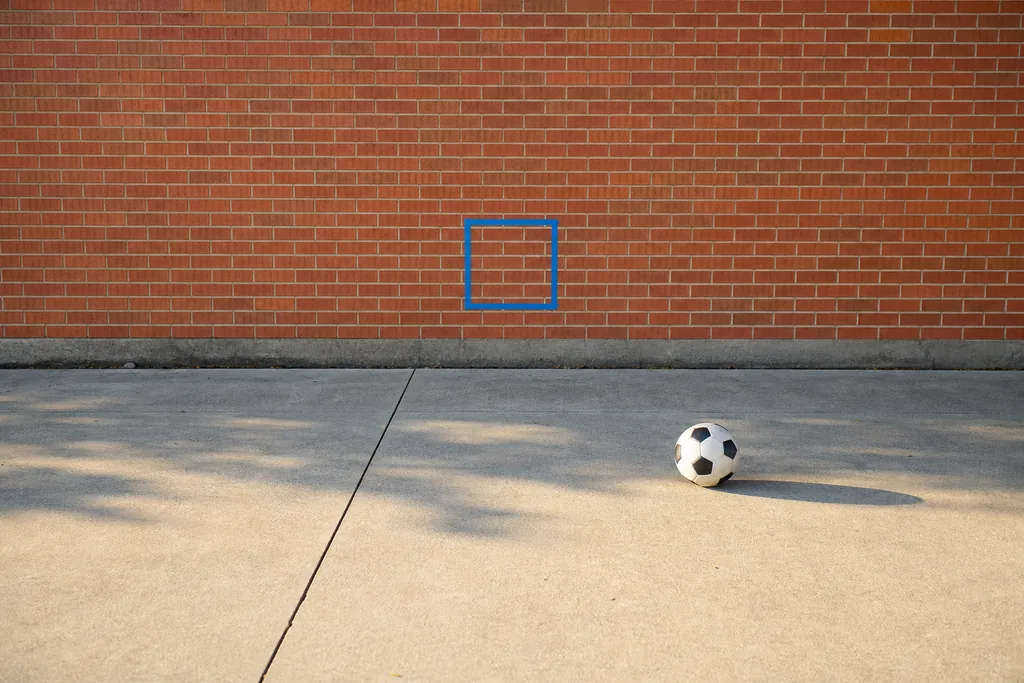
A wall never gets tired of passing back. That makes it one of the most useful training partners a player can have. Setting up a home kick wall only takes three things: a sturdy wall, a safe, flat area in front of it, and a target to aim at. This guide covers how to pick the right wall, prepare the ground and protect everything nearby, so practice doesn’t end with a broken window or a dented door.
Choosing a sturdy wall
Look for a wall that’s solid all the way through. Good choices include:
- Brick or concrete block walls.
- Poured concrete, such as a house foundation or a retaining wall.
- A dedicated rebound wall built for ball practice.
Avoid vinyl or wood siding, thin fences that wobble, windows, glass doors and most garage doors, which can dent. If the wall belongs to someone else, such as a school or a neighbor, always ask permission first.
Preparing the ground
The area in front of the wall should be flat and smooth so the ball rolls back true. A driveway, patio or firm, short lawn all work. Sweep away gravel, sticks and leaves before you start. Give yourself enough room to stand back a comfortable distance and still have a few steps behind you. Our guide to a safe space for home training explains what else to check.
Making a target
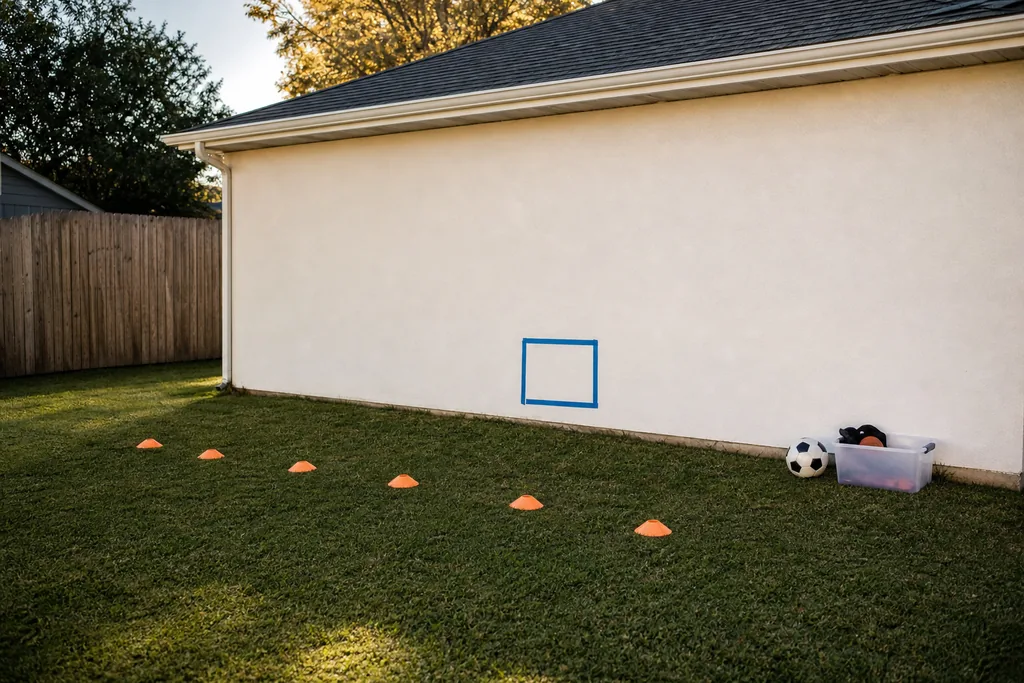
A target turns aimless kicking into real practice. Painter’s tape comes off cleanly and works on most walls. Sidewalk chalk is another easy choice for brick or concrete. Start with a box low on the wall, about knee height or lower, so your passes stay on the ground. As your aim improves, make the box smaller. The Wall Target Accuracy Challenge shows how to put a target to work.
Protecting what’s nearby
- Move cars, bikes and flower pots out of the way.
- Check for windows, lights or outdoor taps near your target area.
- Start with soft passes until you know how the ball bounces off that wall.
- Keep powerful shots for a goal or net, not the house.
A little planning keeps the wall available for practice and keeps everyone at home happy.
Thinking about noise
A ball hitting a wall can be loud, especially indoors or near bedrooms. Pick practice times that suit your household and neighbors. Shorter, regular sessions are also easier on everyone’s ears than one long one.
If you don’t have a good wall
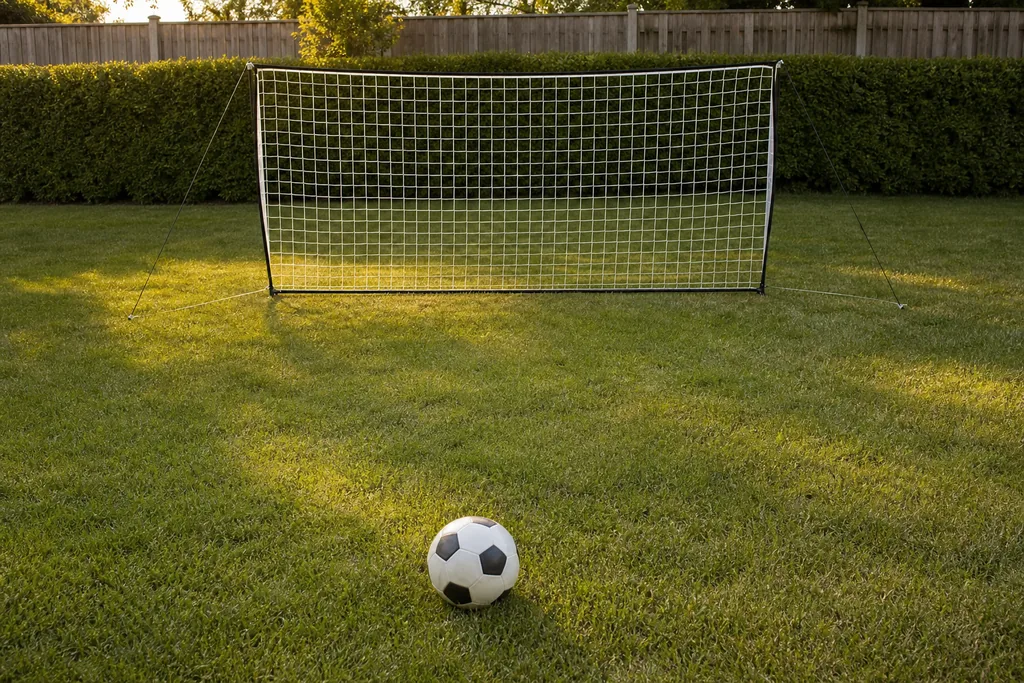
No suitable wall? A rebounder or rebound board can do the same job. The RapidFire Soccer Rebound Board is one option in our shop, and our guide to choosing a rebounder compares the different types.
A quick check after each session
Take a minute to look over the wall and the ground when you finish. Peel off tape that has started to lift and replace it next time. Sweep away any grit the ball has dragged in. If you notice a loose brick, cracked mortar or chipped paint, stop using that spot and pick a different section. Small checks like these keep your wall safe to use for years.
First drills to try
Once your wall is ready, begin with Basic Two-Touch Wall Passing, then read the practice notes for that drill. When you’re ready for a weekly target, try the Daily Wall Passing Challenge. A good wall and a clear target can keep you busy for a long time, so set it up once and use it often.