Skills grow slowly, and that can make kids feel stuck. One day the passes are crisp, the next they’re all over the place. Looking at a single session tells you very little. Tracking soccer progress over weeks and months gives a much fairer picture, for you and for your child. This guide covers what to measure, how to keep it simple, and how to talk about it so it builds confidence instead of pressure.
Why daily results can mislead you
A player’s touch changes with sleep, mood, weather and how much homework is waiting. A bad day doesn’t mean they’ve gotten worse, and a great day doesn’t mean a skill is locked in. The real trend only shows up when you zoom out. That’s why a season is a good length of time to watch.
Pick a few things to measure
Choose two or three simple measures and stick with them. Good ones are easy to count and easy to repeat:
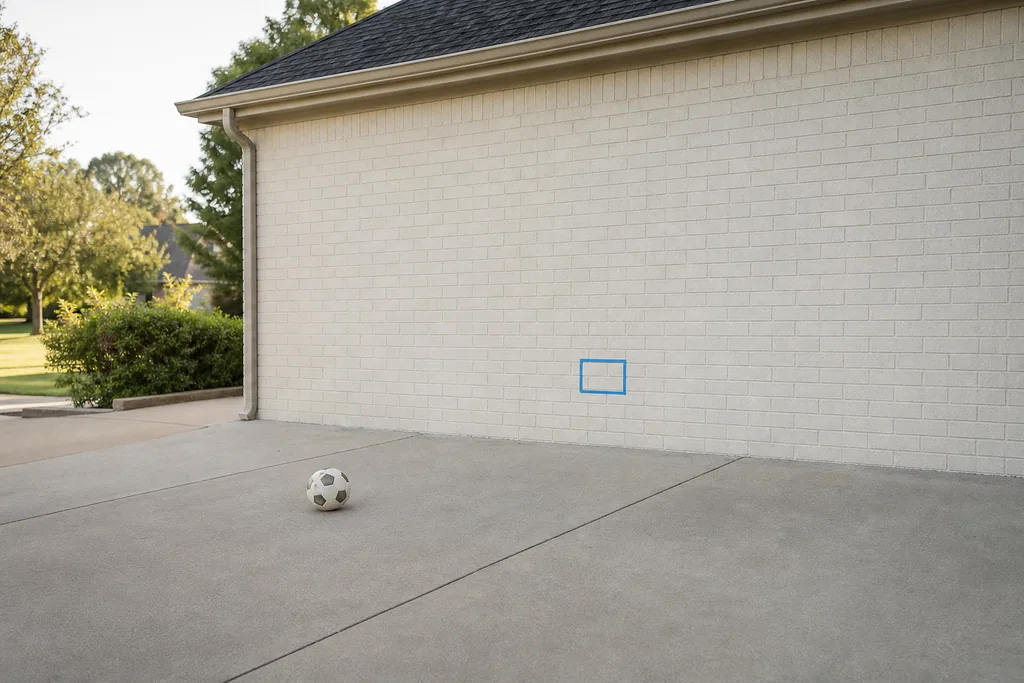
- Passes in a row against a wall without losing control.
- Clean weak-foot passes out of ten.
- How many sessions happened each week.
- The score on one of our weekly challenges, such as the Daily Wall Passing Challenge.
Keep the list short. Too many numbers turn practice into a test.
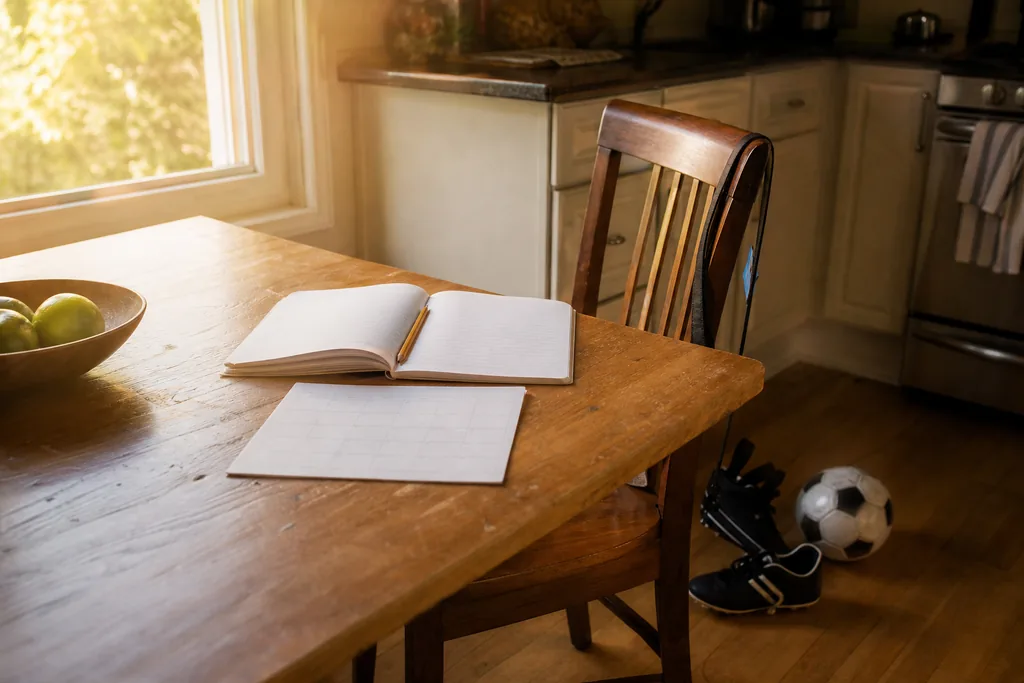
Use a notebook or a calendar
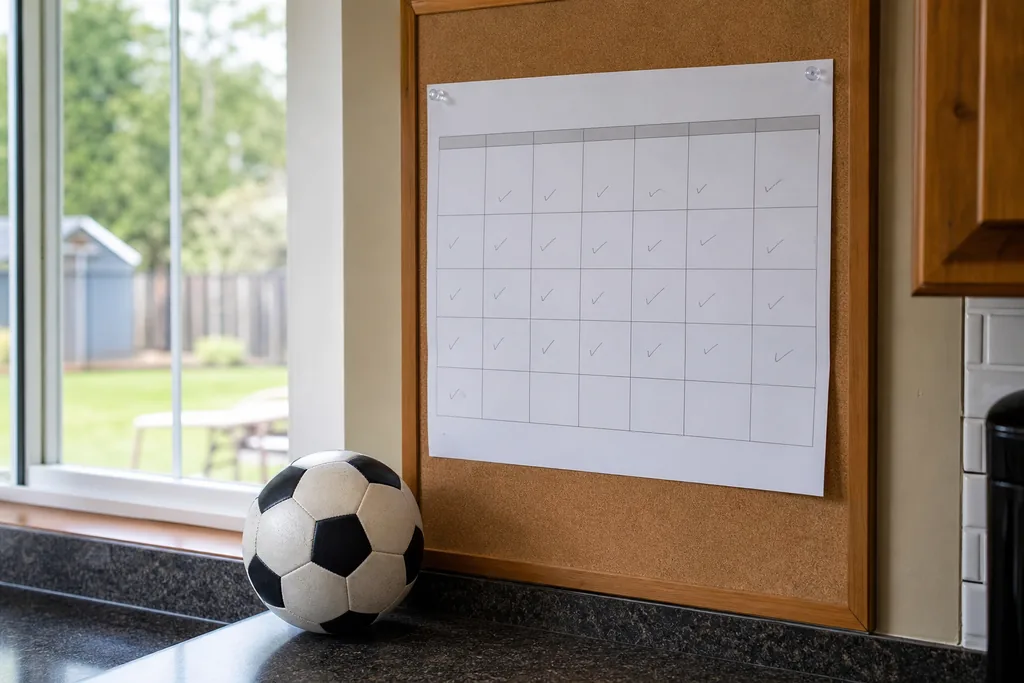
A paper calendar on the fridge works well for younger players. They can put a mark on each day they practice. Older kids may prefer a notebook where they write the date, the drill and their count. Either way, let your child do the writing when they can. It helps them feel the progress belongs to them.
Test the same way every time
Once a month, repeat the same test under the same conditions. Use the same wall, the same distance and the same ball. Do it near the start of a session, before your child is tired. If the setup keeps changing, the numbers can’t be compared. Our article on setting a weekly touch goal shows another simple way to keep score.
Notice what numbers miss
Some of the biggest changes won’t fit in a notebook. Watch for these over the season:
- Calling for the ball more often in games.
- Using the weaker foot without hesitating.
- Starting practice without being reminded.
- Recovering faster after a mistake.
Write these down too. They’re often the clearest sign that home practice is paying off.
Share it in a way that helps
Every month or so, sit down together and look back at the first page. Point out how far things have come. Keep the tone light and curious, not like a report card. If a number hasn’t moved, treat it as a puzzle to solve together. Our article on encouraging without pushing has more on striking that balance.
What a season log might hold
A useful log doesn’t need much. Each entry can be one line with the date, the drill, the count and a word about how it felt. At the end of each month, add a short note:
- One thing that got easier.
- One thing that still feels tricky.
- One goal for the next month.
By the end of the season, those monthly notes tell a clear story that your child can be proud of.
Keep the habit going
Tracking only works if practice keeps happening. Short, regular sessions matter more than long, rare ones. The guide to making practice a habit has ideas for keeping things steady across a busy season.