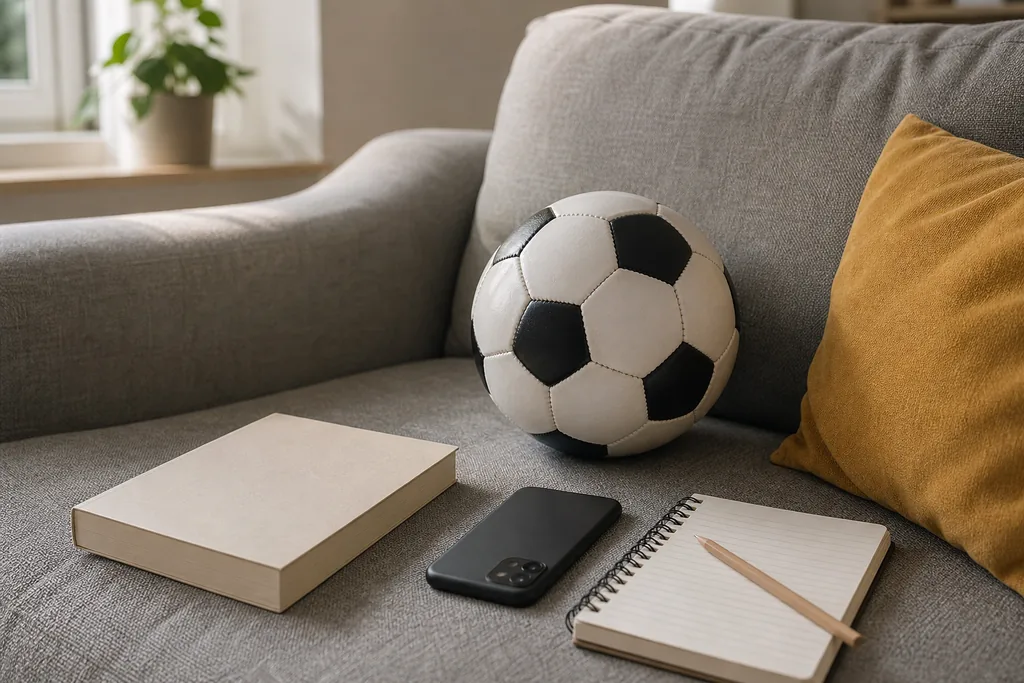
Touches on the ball build skill. Understanding the game tells you when to use it. You can work on that second part on a rest day, on the couch or on the ride to a game, and soccer books for players are a good place to start.
Read about the game
Books written for players, not coaches, are the easiest way in. They explain why a pass goes where it goes and what smart players do before the ball arrives.
Our shop carries Soccer IQ: Things That Smart Players Do, Vol. 1, a book written for players about making smarter decisions on the field. Read a short chapter, then try to spot the idea in your next game.
Watch with a purpose
Watching soccer helps more when you watch one thing at a time. Pick a player in your position and follow them for ten minutes instead of following the ball. Where do they stand when their team has it? What do they do in the second before a pass reaches them?
Our Game Analysis videos are a good place to practice this kind of watching.
Use the phone you already have
You don’t need a special app. A phone already does the useful parts.
- Timer: run drills in rounds, such as 60 seconds on and 30 seconds off.
- Camera: film a few reps from the side and check your standing foot and body shape.
- Notes: write down your score in a challenge so you have something to beat next time.
For younger players, a parent should hold the phone and keep any videos private.
Keep a practice notebook
A notebook might be the oldest training tool there is, and it still works. After each session, write the date, the drill and two short lines: one thing that went well and one thing to fix. After a month you’ll see patterns you would never notice from day to day.
Bring questions to team practice
Learning off the field is also a good way to make team practice more useful. If something in a book or video confused you, ask your coach about it. Coaches are usually glad to explain why a team defends a certain way or where a player should stand. One good question can save weeks of guessing.
Review before game day
The night before a game, spend five minutes with your notebook. Read the last few entries and pick one thing to focus on, like keeping your first touch close or checking your shoulder before the ball arrives. Write it on your hand or in your phone if that helps. A single clear focus is easier to remember in a game than a list of reminders.
Don’t let screens replace the ball
Books, videos and notes are there to support practice, not to replace it. A good rule is that time spent reading or watching should lead straight to time spent with a ball. Watch a short clip, then go outside and try it. The learning sticks when your feet do it, not when your eyes see it.
Turn what you learn into reps
Reading and watching only pay off when they reach your feet. If a book talks about receiving with an open body, try Open-Body First Touch and Pass. If a video shows quick passing, try One-Touch Wall Passing. Then browse our training videos for the next idea to test.