Cones are the cheapest training equipment there is, and they show up in almost every dribbling, footwork and defending drill. The disc cones vs tall cones question comes up fast, though. Both are useful. They just do different jobs.
Disc cones: low, quick and safe to step on
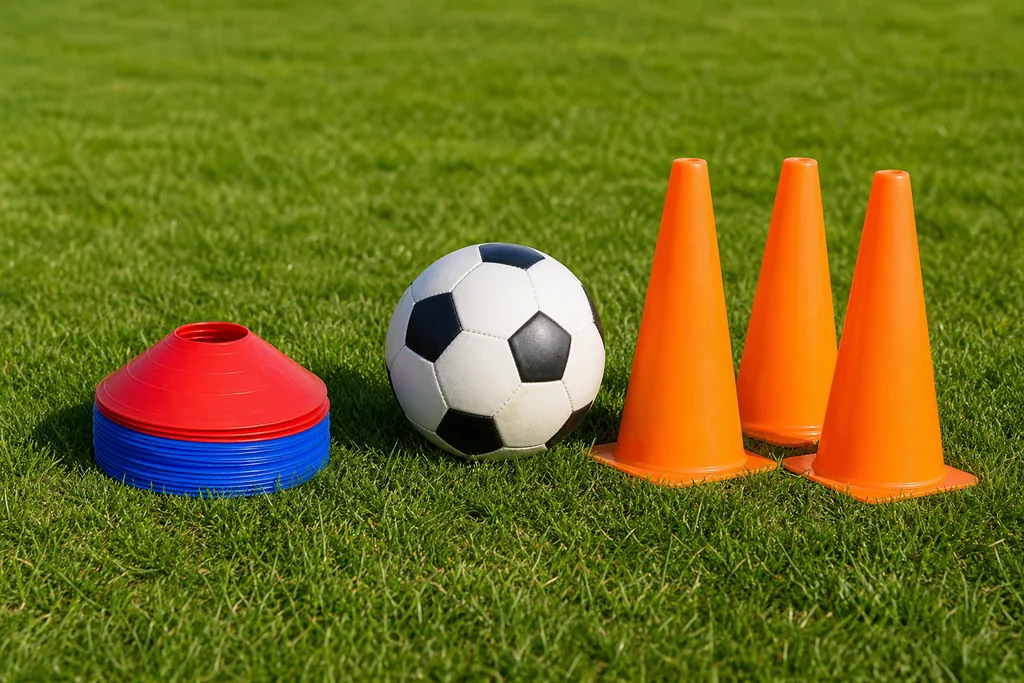
Disc cones are flat, low markers. Because they’re so low, you can dribble right over the top of one without tripping, and stepping on one is no big deal. That makes them the right choice for tight dribbling and footwork, where the ball and your feet are close to the cones all the time.
They also stack into a neat pile. The Kwik Goal Mini Disc Cone Kit in our shop has 50 cones, 25 blue and 25 red, at 1 3/8 inches tall with a carrying strap.
Tall cones: easy to see from a distance
Tall cones stand up off the ground, so they’re easy to see when you’re running or looking up. They’re good for marking the ends of a lane, the corners of a box or the posts of a pretend goal. They’re less good for tight weaves, because a clipped tall cone falls over and breaks the rhythm of the drill.
You don’t need both types to get started. If you’re only buying one, disc cones cover more of the drills you’ll do at home. Tall cones can wait until you want lanes, goals or targets that are easy to spot from a distance.
Which drills need which
- Dribbling weaves and tight turns: disc cones. Try Cone Dribbling or Figure 8 Dribbling.
- Defending footwork: disc cones for the zigzag in Cone Weaving for Defenders.
- Lanes and boxes: either type. Stop and Go Dribbling only needs two cones to mark the ends.
- Shooting targets: tall cones work well as posts when you don’t have a goal.
How many do you need to start?
Fewer than you’d think. Our cone drills use between one and eight cones, so a dozen covers almost everything at home. A larger pack is handy if two players train together or you like to leave a drill set up while you do another.
Set up faster with a plan
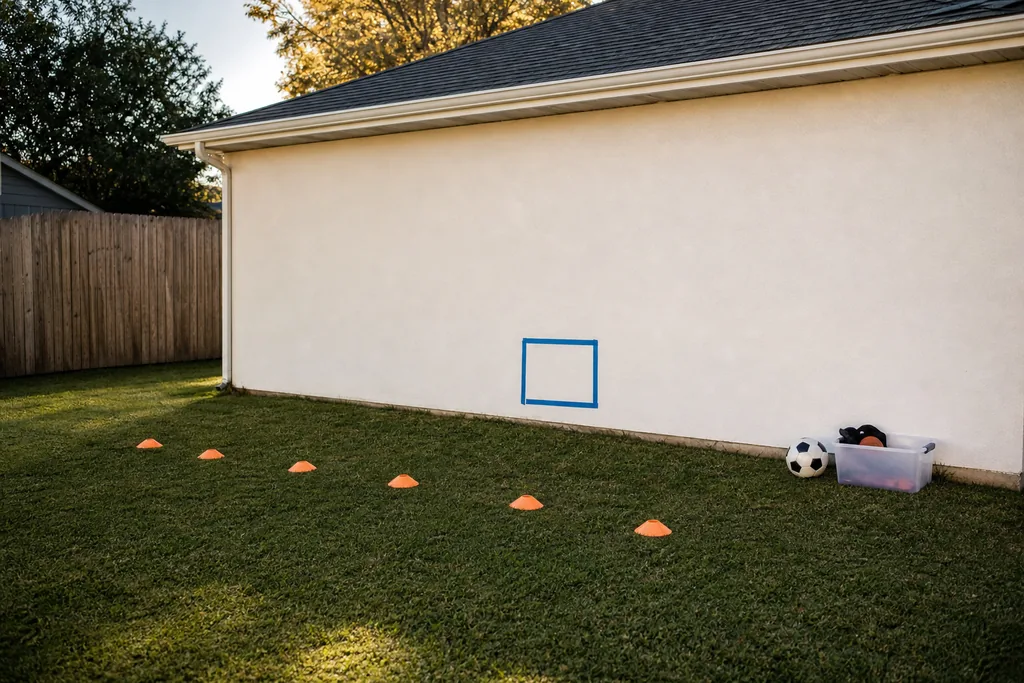
Most cone drills have a simple shape: a line, a zigzag, a square or a V. Our drill steps give the spacing, such as 5 or 6 cones about two big steps apart for Cone Dribbling, or a square about 5 yards on each side for Box Dribbling. Pace out the spacing once, mark the spots with chalk, and next time setup takes seconds.
Look after your cones
Cones are tough, but a few habits keep them in good shape. Pick them up after every session instead of leaving them out in the sun, which can make plastic brittle. Stack them by color and keep them in a bag or bin with the ball. Count them when you pack up. A lost cone in long grass is easy to miss, and it’s a trip hazard the next time someone runs across the yard.
Two colors help
If your cones come in two colors, use them. Call out a color and dribble to it, or set a weave with alternate colors and change direction at every red one. It adds a little thinking to the footwork, the same way a game does.
Pick up a set, lay out your first weave and start with our dribbling drills.