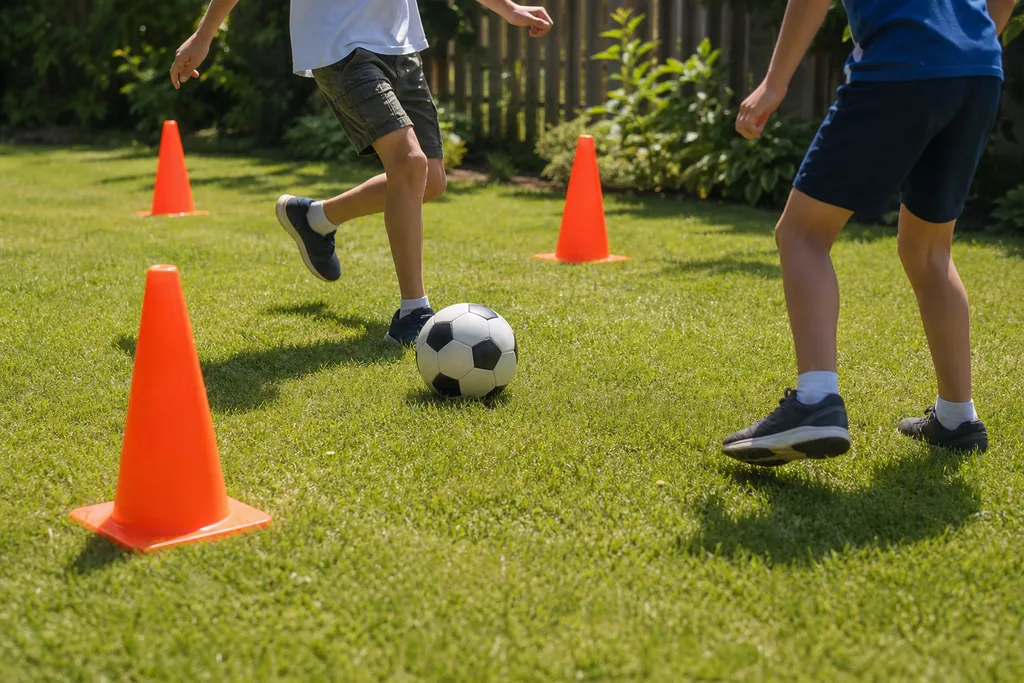
Younger players practice when it feels like play. The good news is that most drills turn into games with a small twist: a timer, a score, a rule to follow or someone to beat. Here are some fun soccer games for kids at home, all built on skills from our drills.
Beat your record
Pick a drill with a count, like Basic Two-Touch Wall Passing, and set a timer for one minute. How many clean passes can they make? Write the number on a card. Next session, the card is the opponent. It’s simple, and it works for almost any drill.
Keep the old cards in a box. Looking back at the first score after a month of practice is a great moment for a young player, because the progress is right there in their own handwriting.
Traffic light dribbling
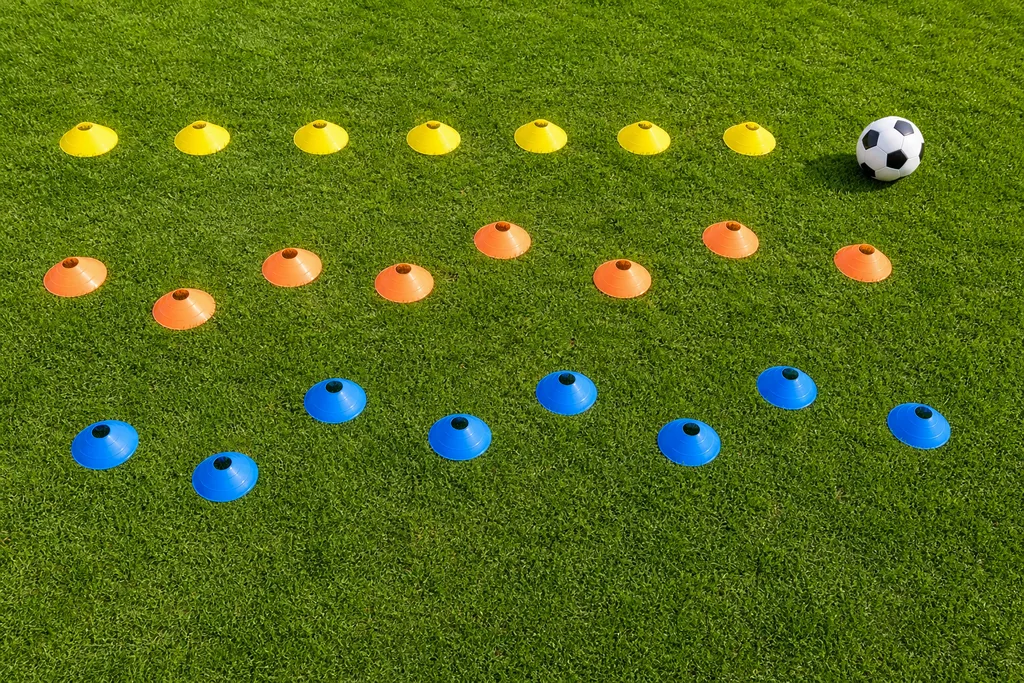
Your child dribbles around the yard while you call out colors:
- Green: dribble at normal speed.
- Yellow: slow down with small, careful touches.
- Red: stop the ball dead with the sole of the foot.
Add fun extras like “purple” for a turn or “blue” for switching to the other foot. It trains control, listening and quick reactions, and younger kids love being caught out.
Cone knockdown
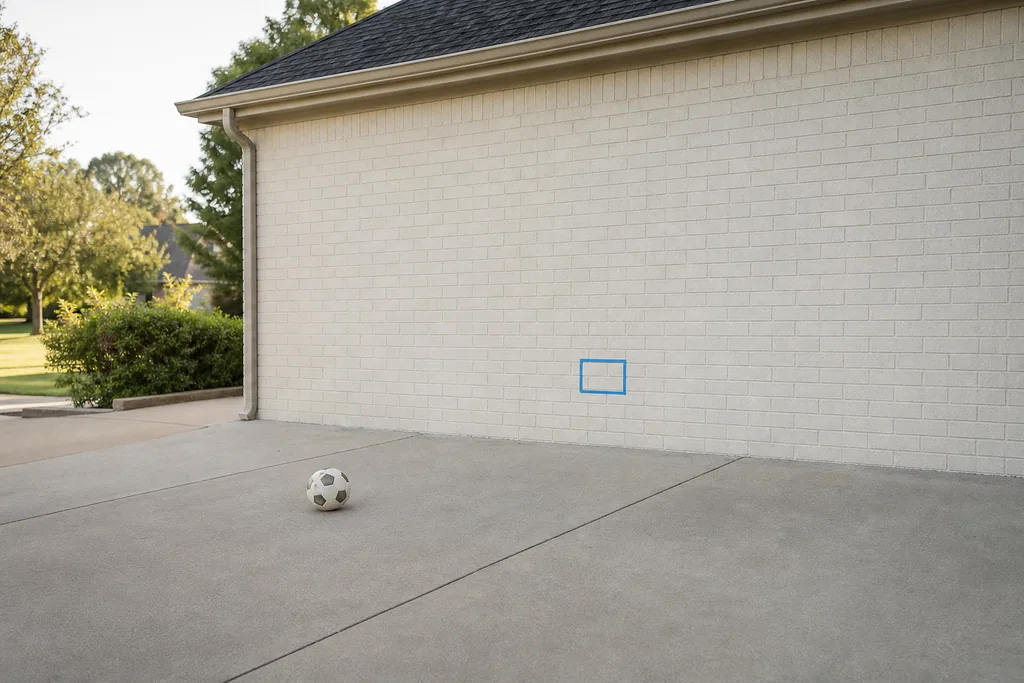
Stand a few tall cones near a wall or fence with a safe backstop. Each one knocked down with a pass or shot scores a point. Start close with the inside of the foot, then move back. It’s Inside-Foot Placement with a scoreboard.
Around the world race
Around the World moves the ball in a full circle around the body. Time how long it takes to go around once in each direction without losing the ball. Then race a parent or a sibling. Adults are rarely as fast as they think.
Parent versus kid
Pick any drill and both take a turn. Kids enjoy few things more than beating a grown-up, and it shows them that everyone makes mistakes. If you’re winning too easily, use your weaker foot. If they’re winning every time, raise the target.
Rewards that work
Small rewards can help younger players build momentum. Stickers on a chart, choosing the next game, or picking dinner after a week of practice all work well. Reward the effort, like “five sessions this week”, rather than the score, so every child can earn it. Over time, the fun of getting better tends to take over from the reward.
Keep the games short
With younger kids, change the game every few minutes. Short games end while they’re still exciting, which keeps energy up. Three quick games of two or three minutes each will often get more good touches than one long drill that turns into a struggle.
Let them invent one
Every so often, let your child make up a game: the rules, the scoring, the prize. Some of their inventions will be silly. Some will be surprisingly good drills. Either way, they’ll want to play the game they designed.
When the games run out, the weekly challenges give older kids a fresh goal each week. For the bigger picture on supporting practice, read helping your child practice at home.