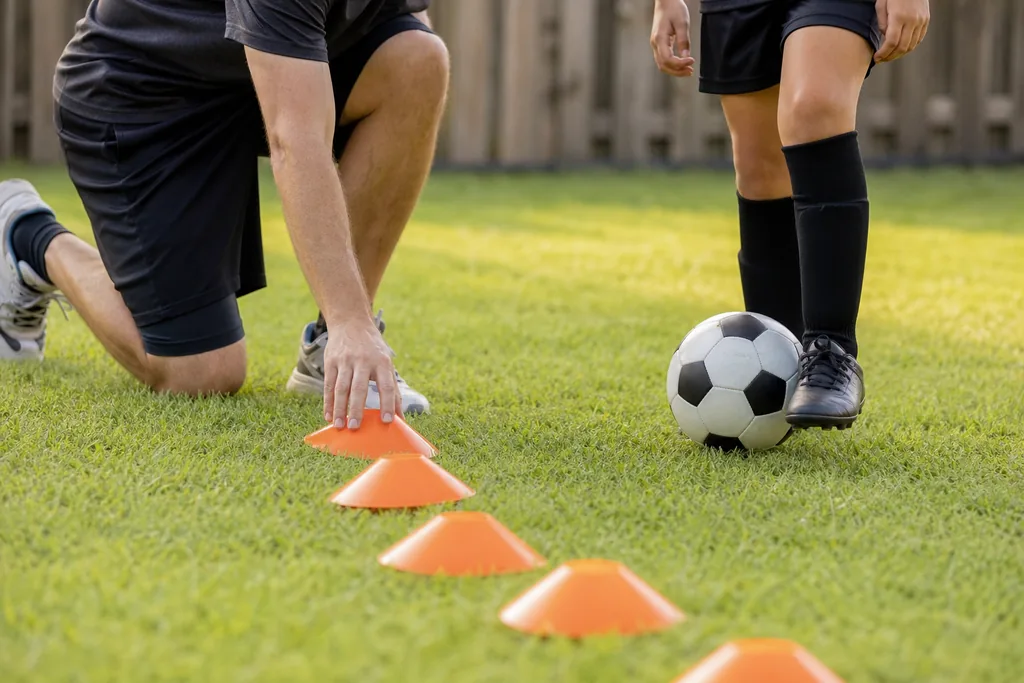
You don’t need to know much about soccer to help your child practice soccer at home. Most of the useful jobs are simple ones: getting the space ready, feeding a ball, keeping count and noticing progress. Done well, they make practice easier without turning it into homework.
Get the space ready once
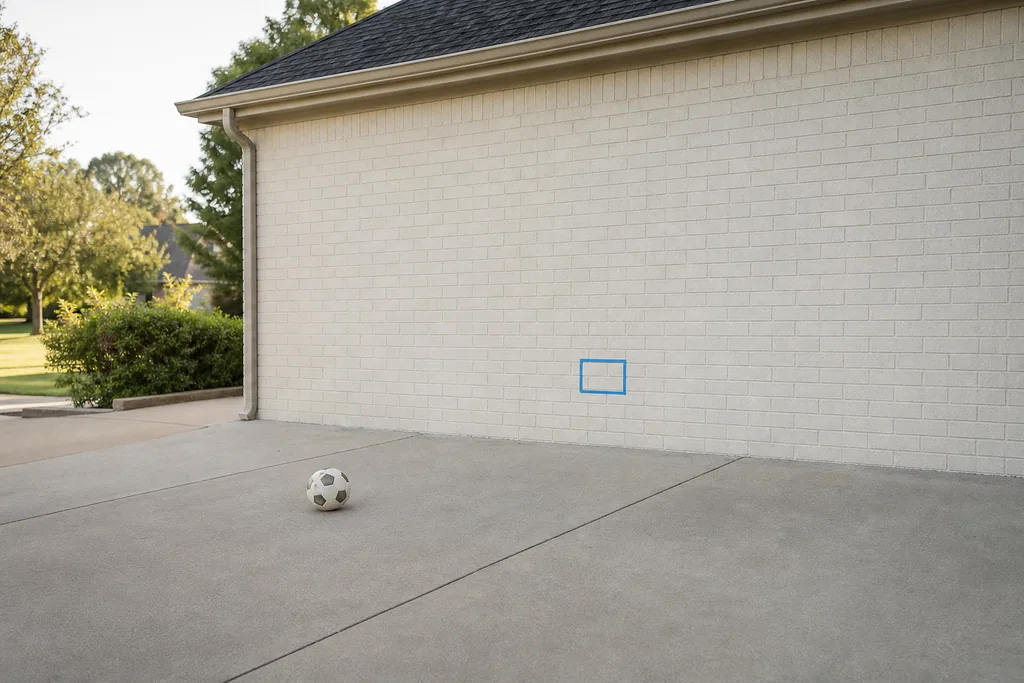
Help set up a spot with a wall or rebounder, flat ground and a place to keep the gear. Once it’s ready, practice can start without you. Our safety check for home training and the guide to building a home training corner cover the details.
Be the feeder
Some drills are easier with a second person. If your child is working on balls in the air, a gentle underhand toss gives them a cleaner start than chipping the ball themselves. Drills like Thigh Control and Pass and Chest Control and Volley begin with a toss, which is a job anyone can do.
Keep the tosses soft and consistent at first. Speed and variety can come later.
If you’re not confident tossing, roll the ball along the ground instead. It’s still useful practice.
Keep score
Kids love beating their own number. Count clean passes, time a round of dribbling, or track hits on a wall target. Write the result down where both of you can see it. You don’t need to comment on the number. The number speaks for itself, and next week’s number usually speaks louder.
Plan the week together
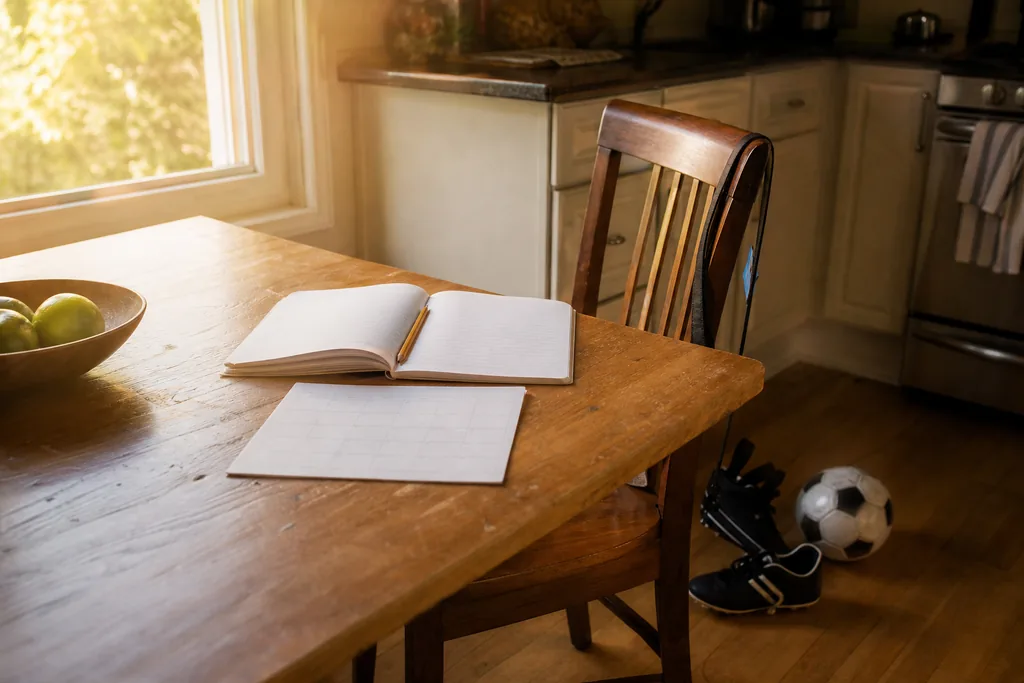
Sit down once a week and pick the days and drills together. A plan on paper turns “Go practice” into “It’s Tuesday, so it’s wall passing.” Let your child choose most of it. Your job is to make sure the plan fits around school and leaves room to rest.
Things to avoid
- Practice as punishment. “You played badly, so you’re practicing tonight” teaches a child that practice is a penalty.
- Practice as the price of screen time. It turns the ball into a chore to get through.
- Long lectures. One short tip is plenty. A list of ten corrections is forgotten by the next drill.
- Comparisons. Comparing them to a teammate or a sibling rarely helps anyone practice more.
Keep the gear within reach
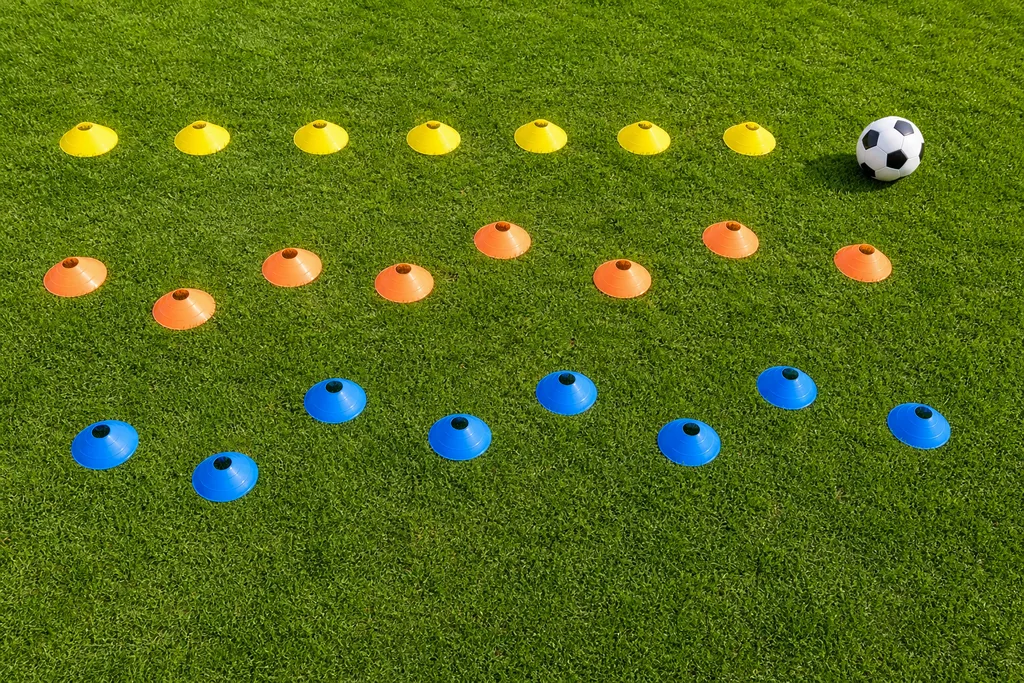
Younger children practice more when they can start on their own. Keep the ball, cones and a small pump somewhere they can reach without asking, like a low shelf in the garage or a bin by the back door. If they have to wait for an adult to get things down, practice waits too.
Bring in a friend or a sibling
Practice is often more fun with company. A friend or a brother or sister can feed passes, race in a timed drill or take turns on the wall. Keep the drills the same and just add a second player. Two kids taking turns also builds in natural rest between rounds, which helps younger players keep going longer.
Notice the progress
Progress at home is slow and easy to miss from day to day. Every few weeks, look back at the scores, or film the same drill again and compare. Point out what’s changed. Seeing their own improvement is often the best encouragement a young player can get. For more on the right kind of praise, read encouraging without pushing.