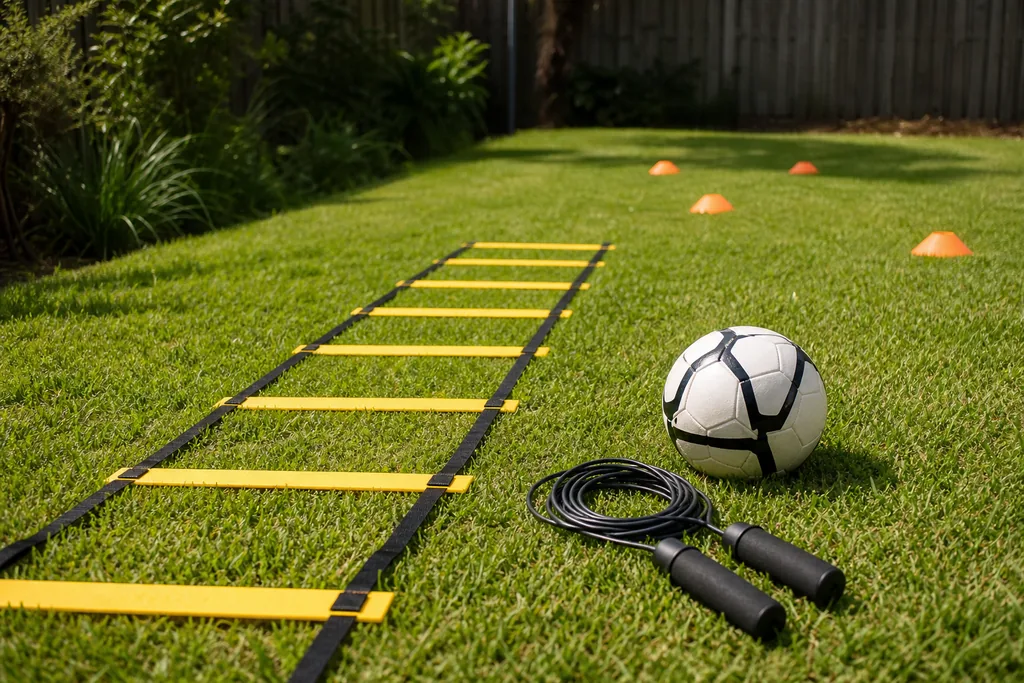
Quick feet help in almost every part of soccer, from getting to a loose ball first to adjusting your steps before a pass. Two of the simplest tools for that are a speed ladder and jump rope. Both are light, easy to store and work in a small space. This guide covers what each one is good for and how to fit them into home practice alongside your ball work.
What a speed ladder is
A speed ladder is a flat ladder made of straps and rungs that lies on the ground. You step, hop or shuffle through the boxes in different patterns. It trains your feet to move quickly and land in the right place, which is the same thing you need when the ball is at your feet and space is tight.
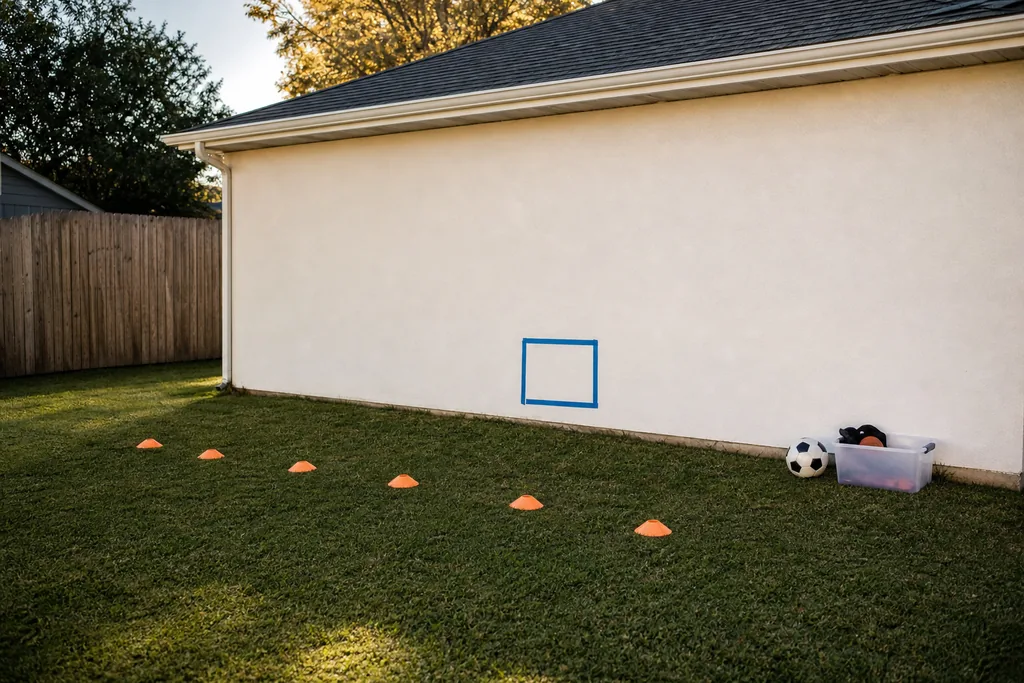
If you don’t have one yet, a line of disc cones or tape on the driveway can mark out boxes the same way. Our guide to disc cones or tall cones explains the difference.
What a jump rope adds
A jump rope builds rhythm and keeps you light on the balls of your feet. It’s also a simple way to warm up before a session or add some conditioning when you only have a few minutes. Start with basic two-foot jumps, then try alternating feet as if you were jogging in place. Small, quiet jumps are the aim. If you’re landing heavily, slow the rope down until you can stay light. Pick a rope that suits your height, so it clears your head without dragging a long loop on the ground.
Setting them up safely
- Lay the ladder flat on grass or a smooth surface, away from steps, curbs and slopes.
- Check that nothing is under the ladder that could roll or catch a foot.
- For a jump rope, look up as well as around: low branches and ceilings get in the way.
- Wear proper shoes rather than socks or sandals.
For a full checklist, read a safe space for home training.
Simple ladder patterns to start with
- One foot in each box: run through quickly, landing lightly.
- Two feet in each box: both feet touch inside before you move on.
- Side step: face sideways and shuffle along the ladder.
- In and out: step both feet in, then both out to the sides, moving forward each time.
Go through slowly at first. Clean foot placement matters more than speed until the pattern feels easy.
Linking the gear to the ball
Footwork tools are most useful when you connect them to ball work. After a few ladder runs, go straight into a dribbling drill like Toe Taps or Box Dribbling, so your feet carry that quickness onto the ball. The Quick Feet Challenge and our footwork drills page have more ideas for combining the two.
How much to use them
Think of the ladder and rope as a side dish, not the main meal. A few minutes at the start of a session is plenty for most players. The bulk of your time should still go to touches on the ball. If you’re unsure how to balance a session, how long should practice last can help.
Storing them
Both tools roll or fold up small. Keep them in a bag with your cones so they’re ready when you are. If you’re planning a dedicated spot at home, building a home training corner shows how to keep gear tidy and easy to reach.