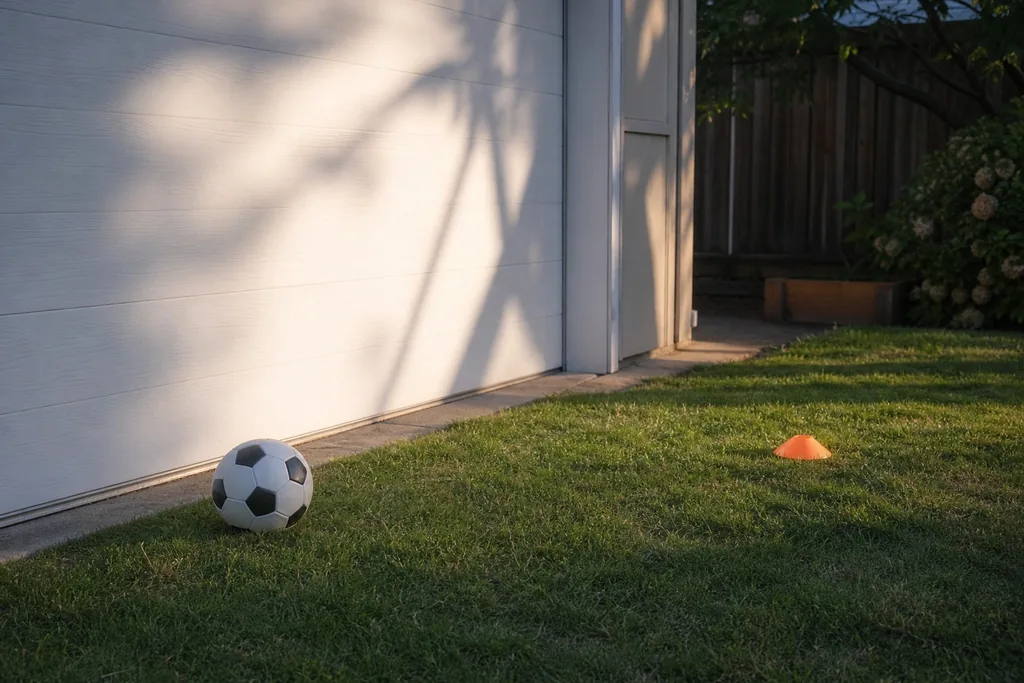
Some weeks there’s barely time to breathe, let alone practice. That’s when focused soccer practice matters most. Ten minutes where every touch has a purpose will do more for you than an hour of kicking a ball around while thinking about something else.
Give each session one job
Before you start, decide what the session is for. “Cleaner first touch with my left foot” is a job. “Practice soccer” isn’t. With one clear job, you know which drill to pick, what to watch for and whether the session worked.
Write the job down before you start, even if it’s just on your hand or a sticky note on the garage wall. When the session ends, ask one question: did I do the job? If yes, pick a new one next time. If not, keep the same job for another session. One job at a time adds up quickly over a month of busy weeks.
A ten-minute plan
Here’s a simple shape for a short session:
- 2 minutes to warm up: Toe Taps or Inside-Outside Dribbling to get your feet moving.
- 6 minutes on the main drill: the one that matches today’s job. Work in rounds of about a minute, with a short break between.
- 2 minutes on a scored finish: count clean reps and write the number down.
That last part matters. Ending with a score gives the session a finish line, and it gives you something to beat next time.
Drills that demand attention
Some drills don’t let your mind wander, which makes them perfect for short sessions.
- Defensive Reaction Drill: every return comes back at a different angle and speed.
- Reaction and Recovery Challenge: you react to wherever the rebounder sends the ball.
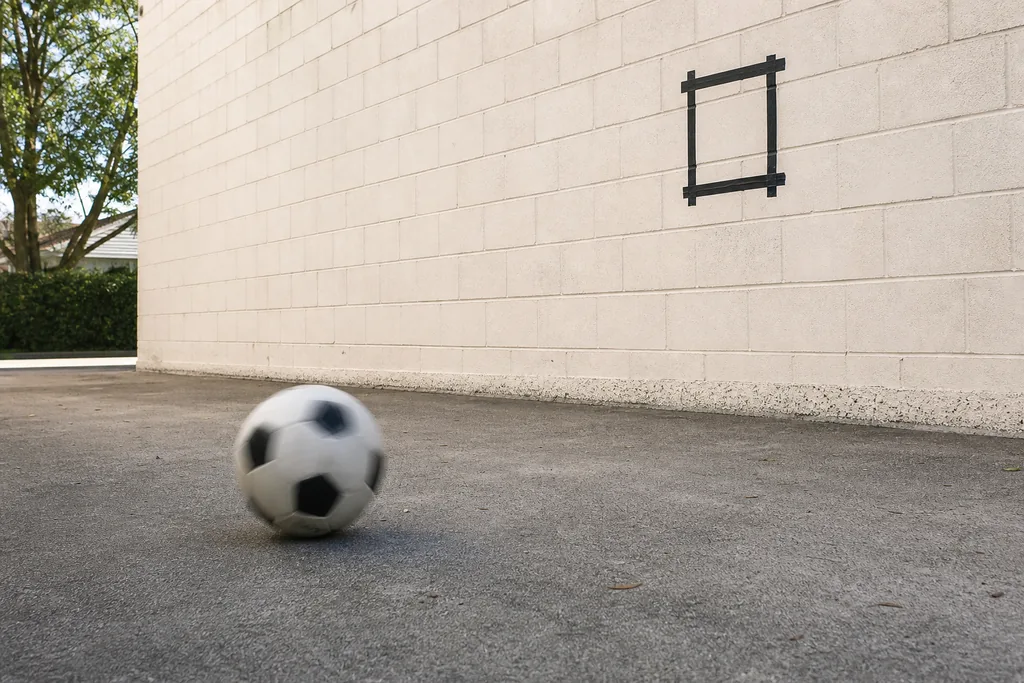
- Wall Target Accuracy Challenge: one target, every pass counted.
Our Reaction & Awareness page has more ideas for training your eyes and your decisions as well as your feet.
Clear the distractions
Focus is easier when there’s less competing for it. Leave the phone inside or face down. Tell the family you’ll be ten minutes. If music helps you settle, keep it on, but skip anything that pulls your attention away from the ball.
It also helps to practice in the same spot at the same time when you can. Your brain starts to connect that place with focused work, so it’s easier to settle in quickly.
Match the drill to the week
On the busiest weeks, choose drills with almost no setup. Ball-only drills like Toe Taps, Around the World and Inside-Outside Dribbling need nothing but a ball and a small flat space. Save the cone layouts and rebounder sessions for quieter days, when setup time doesn’t eat into practice.
Bring the focus to games
The one-job idea works on game day too. Pick one thing to concentrate on, like checking your shoulder before you receive or keeping your first touch close. Having one clear focus keeps your mind on the game instead of the score, the crowd or the last mistake.
Stop when the focus goes
When your touches get sloppy and your mind is somewhere else, the session is over, even if the timer isn’t. Seven good minutes beat seven good minutes plus three careless ones, because careless reps teach careless habits. End on a clean rep and come back tomorrow.
Focus is a skill, the same as passing. The more often you practice it, the longer it lasts.