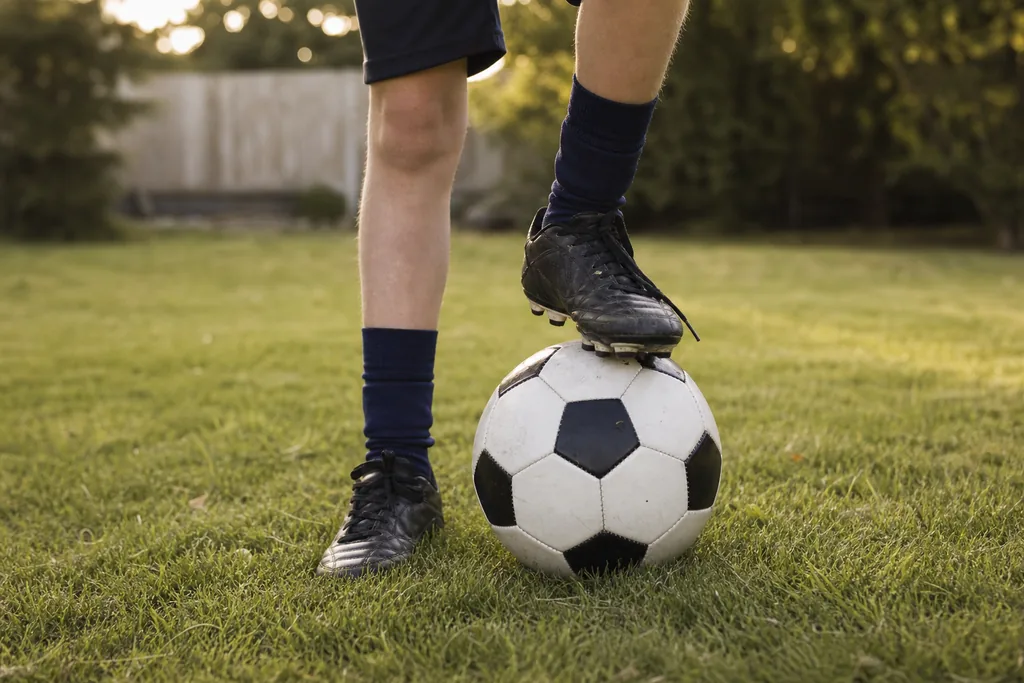
Some players look calm when the ball comes to them. They take a touch, look up and play. That calm isn’t a personality trait. Confidence on the ball in soccer is built, mostly through thousands of quiet repetitions that nobody else sees.
Where the nerves come from
Nerves on the ball usually come from not knowing what will happen next. Will the first touch stay close? Will the weak foot do what it’s told? When the answer is “maybe”, players rush, panic or get rid of the ball as fast as they can.
Nerves aren’t a sign that something is wrong with you. Almost every player feels them, especially in big games or when they move up to a new team. The goal isn’t to make nerves disappear. It’s to have done the work so often at home that your feet know what to do even when your stomach is jumpy.
Repetition makes the ball predictable
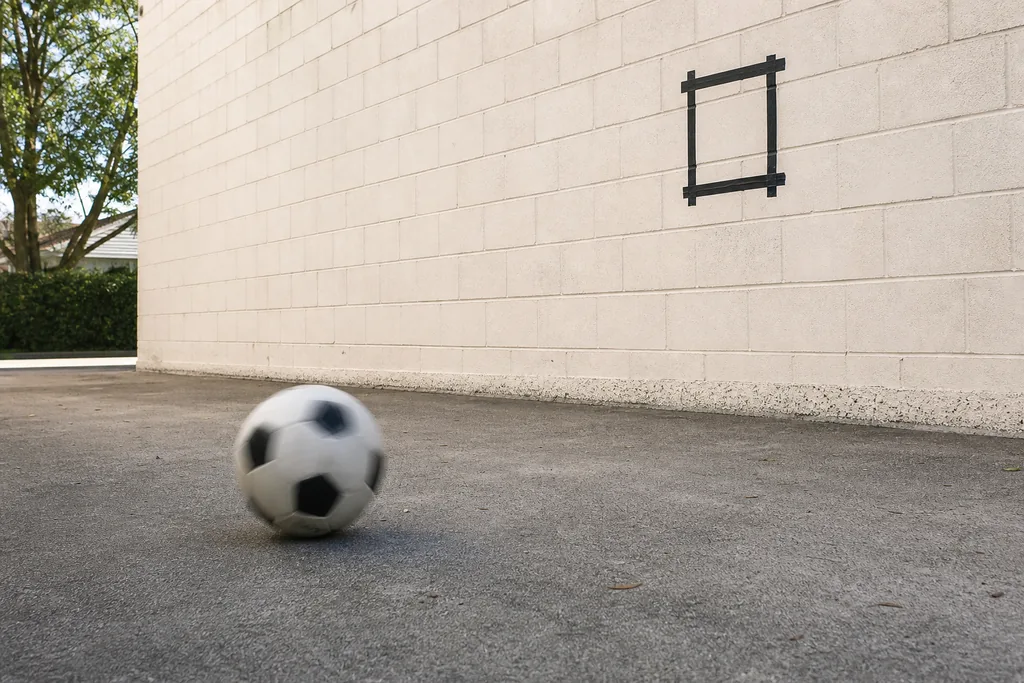
Every touch at home answers that question a little more. Pass against a wall a few hundred times and your first touch stops being a surprise. Your body learns how hard to cushion the ball and where to put it. When the same thing happens in a game, it feels familiar instead of scary.
That’s why touches matter so much. Our article on why to get touches on the ball every day goes into more detail.
Practice the moments that scare you
Think about the moments in a game that make you tense, and practice those on purpose.
- Receiving with someone behind you: Open-Body First Touch and Pass and Receive, Turn, and Pass
- Using your weaker foot: One Foot Dribbling
- Quick passes when there’s no time: One-Touch Wall Passing
The moment you practice most is the one you’ll fear least.
Use both feet
Players who can only use one foot are easier to read and easier to pressure. Every time you practice, give your weaker foot real reps instead of a few at the end. It feels slow at first. Within a few weeks it stops feeling strange.
Talk to yourself like a teammate
What you say to yourself after a mistake matters. “I always mess this up” makes the next touch tighter. “Next one, stay calm” lets you reset. Try to talk to yourself the way a good teammate would: short, calm and focused on the next action, not the last one. It feels odd at first, and it gets easier with practice, the same way a skill does.
Keep track of small wins
Confidence grows faster when you can see it growing. Use a challenge with a score, like the count of clean passes in Wall Target Accuracy Challenge, and write your result down after each session. Watching that number climb over a few weeks is proof that the work is paying off, and proof is hard to argue with when the nerves start.
Take it into games
Go into each game with one small, controllable goal, like “take a good first touch every time” or “look up before I receive”. Hitting a small goal builds the same confidence a good drill session does.
Calm on the ball is earned at home. Start with a few minutes today, and use our footwork drills and dribbling drills to keep the reps coming.