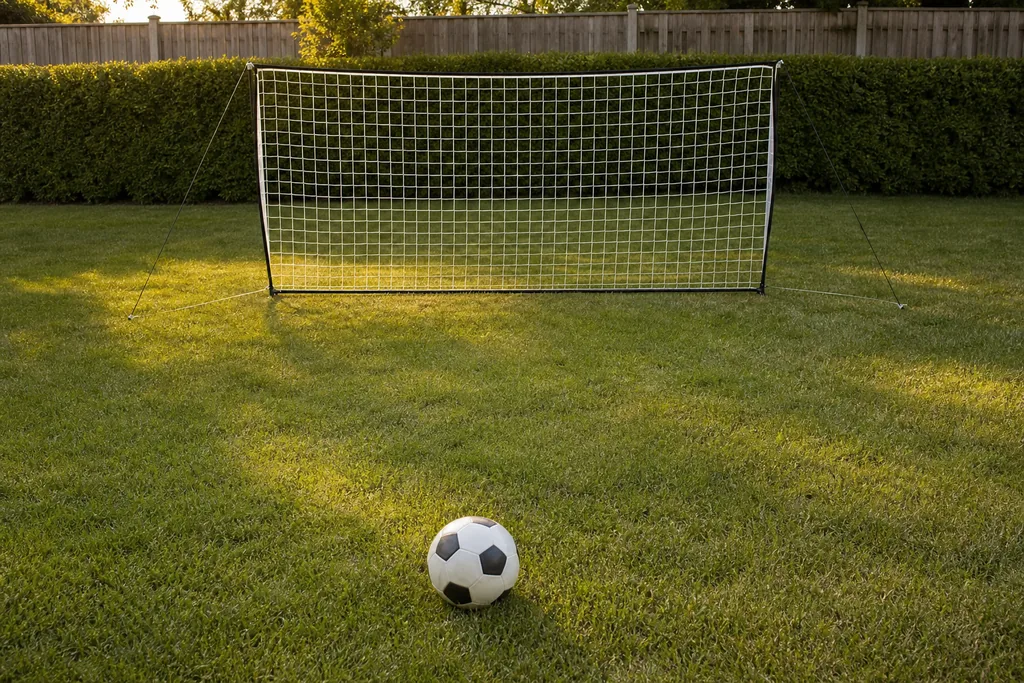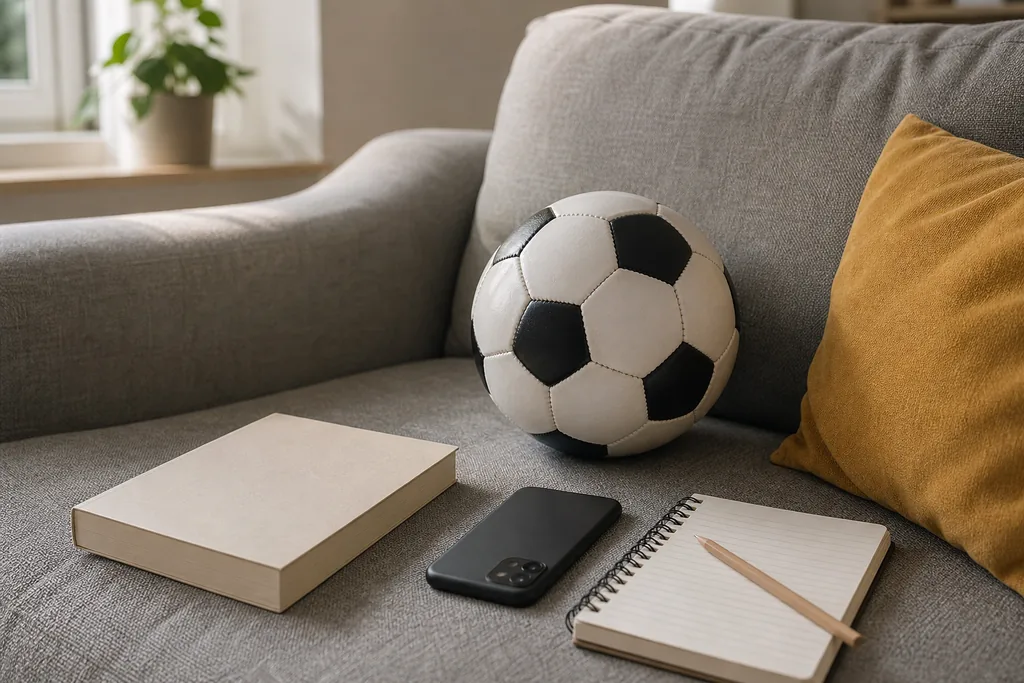
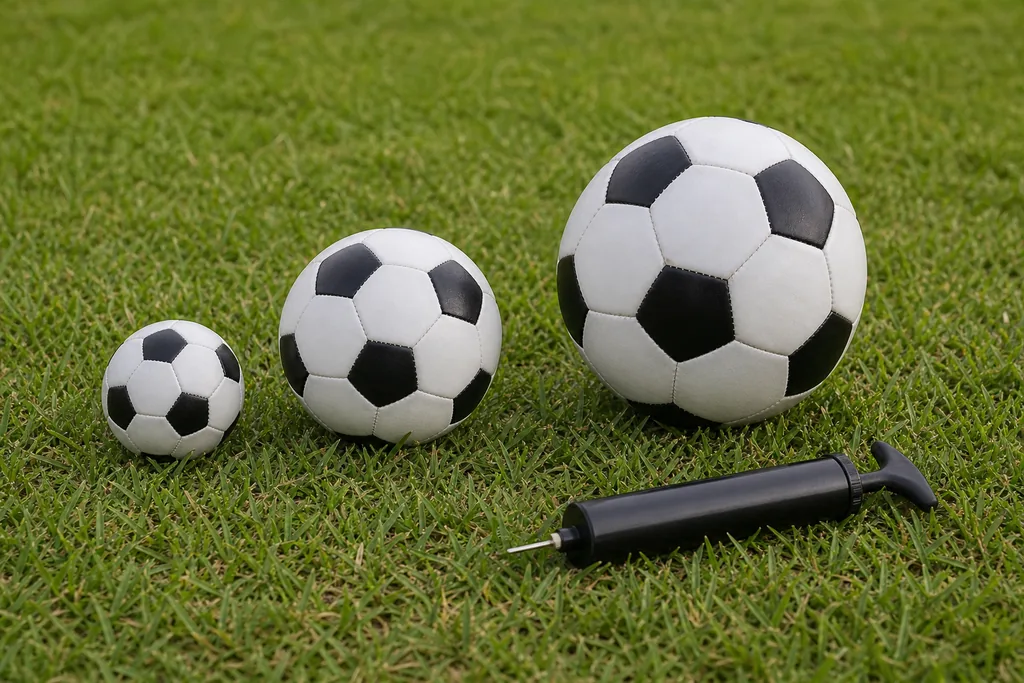
A ball that’s too big or too hard makes every drill harder than it needs to be. The right size and the right pressure help young players get a clean touch and feel in control. Here’s how to think about soccer ball size by age, and why pressure matters just as much.
The three common sizes
Youth soccer in the US mostly uses three ball sizes:
- Size 3: the smallest, used by the youngest players, usually up to about age 8.
- Size 4: for players roughly 8 to 12.
- Size 5: the full-size ball, from about age 12 or 13 through adults.
Leagues set their own rules, and the cut-off ages can differ. The simplest check is to ask your child’s coach or league which size they play with, and practice with the same one at home.
Why the right size matters
A ball that’s too big for a young player is heavy to kick and hard to control. Passes come up short, first touches bounce away and confidence drops. With the right size, the ball does what the player asks, which makes practice more rewarding. Practicing with the game-day size also means the touch you build at home carries straight into games.
If your child is between sizes, or plays on two teams that use different balls, choose the size they use most in games. Moving up a size is a normal step as players grow, and it usually takes only a few sessions to get used to the bigger ball.
Pressure changes everything
The same ball feels completely different depending on how much air is in it. Most balls have the recommended pressure printed near the valve.
- Too hard: the ball flies off the foot, bounces away from a first touch and can sting.
- Too soft: the ball feels dead, passes slow down and wall returns come back weakly.
A small hand pump with a gauge is worth having. Check the ball every week or two, because balls slowly lose air.
Two balls can help
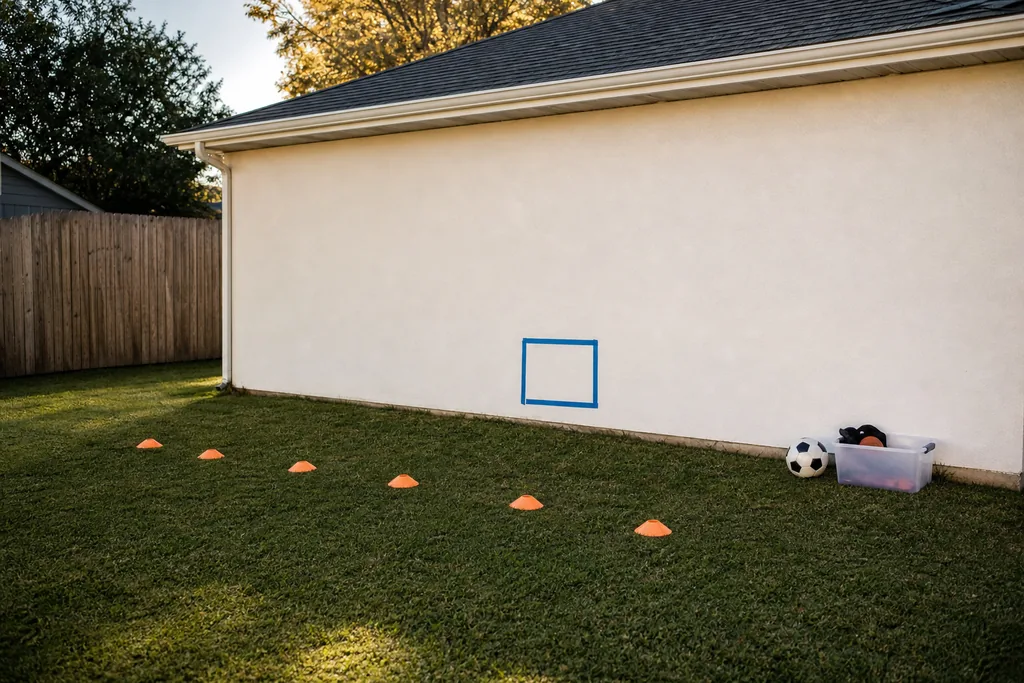
Many families keep a game ball and a practice ball. Concrete and brick are rough on a ball’s surface, so an older ball can take the beating of wall drills while the newer one stays in good shape for games. Just make sure the practice ball is the same size.
Looking after a ball
- Keep it out of hot cars and direct sun for long periods.
- Wipe off mud and let it dry before putting it away.
- Don’t sit on it. It sounds obvious, but it changes the shape over time.
- Replace it when it won’t hold its shape or its air.
A softer ball for indoors
If practice sometimes moves indoors, think about a softer ball. A foam ball or a lighter, low-bounce ball is kinder to walls, furniture and windows, and it still works for close-control drills like Toe Taps and Around the World. Keep the proper ball for outdoor sessions, so the touch you build matches the ball you play with on game day.
Ready to practice
Once the ball is right, every drill gets a little easier. Start with Basic Two-Touch Wall Passing or Cone Dribbling, and see our guide to building a home training corner for the rest of the setup.