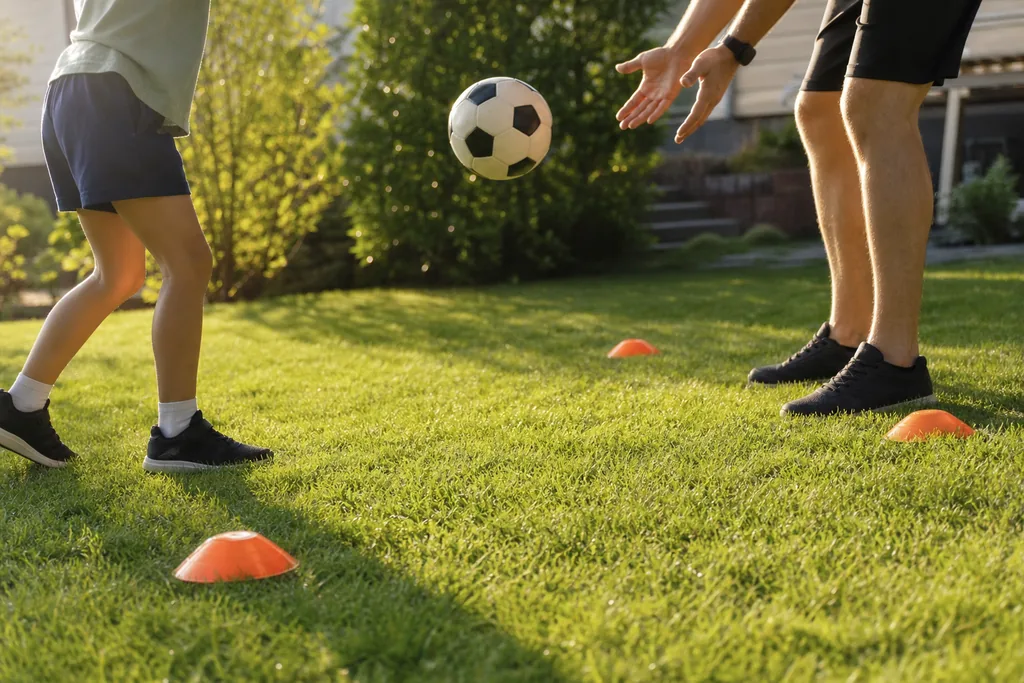
Many parents want to help with soccer at home but hold back because they never played. The good news is that most home drills don’t need a skilled adult. They need someone willing to roll a ball, hold a stopwatch or stand still as a pretend defender. This guide picks out soccer drills for parents and kids that work even if the adult has never kicked a ball in a game.
What a parent can do without any skill
You don’t need to demonstrate anything to be useful. Here are jobs any adult can take on:
- Feeder: roll or toss the ball so your child can practice receiving.
- Counter: keep track of passes, hits or runs, so the player can concentrate.
- Timer: hold a phone or watch and call out times for cone drills.
- Cone setter: lay out the shape before your child starts.
- Defender: walk or jog alongside, giving your child something to move around.
Passing drills where you are the wall
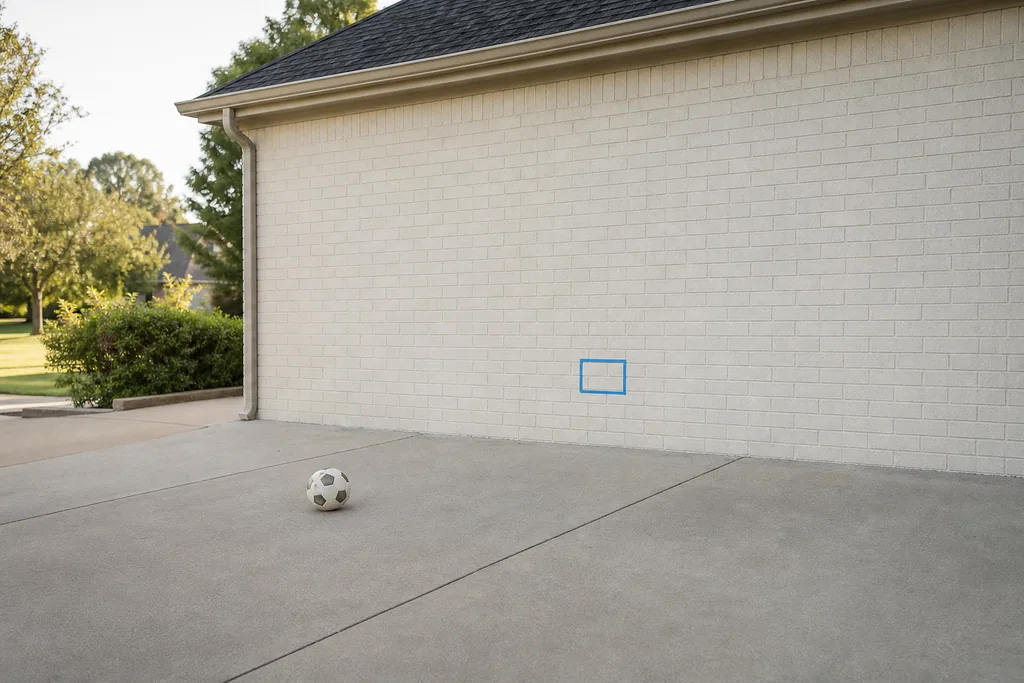
A child passing to a parent is the oldest drill there is. Stand a few steps apart and pass back and forth with the inside of the foot. Your passes don’t have to be good. Rough ones actually help, because your child has to adjust their feet to reach them.
If you’d rather stay out of the passing, set them up with Basic Two-Touch Wall Passing and count the clean touches for them.
Cone drills you can time
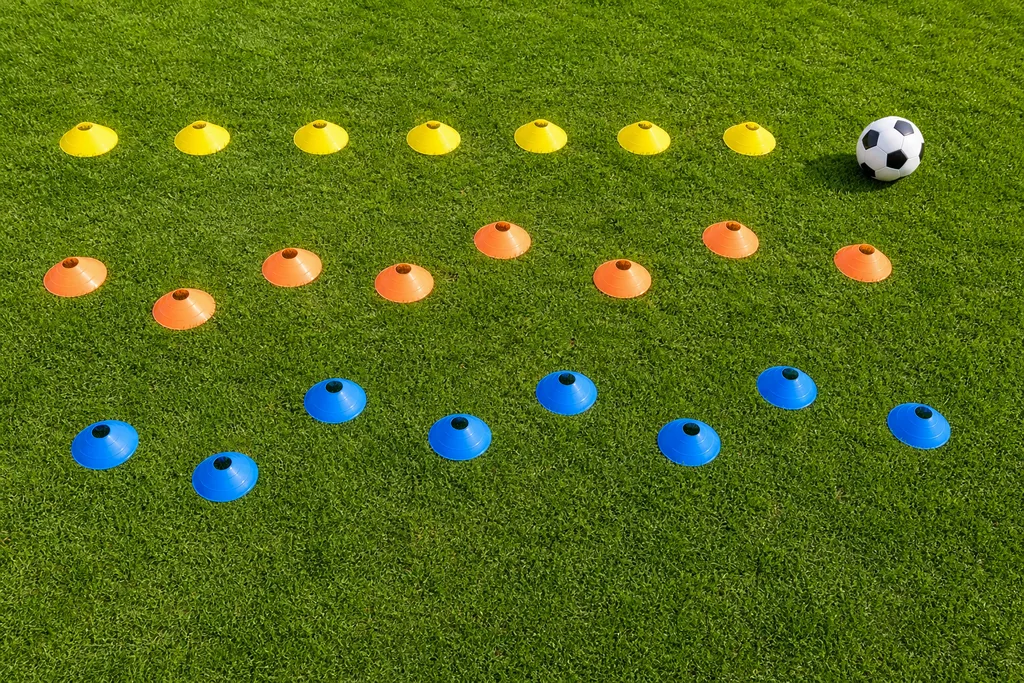
Dribbling drills are great for families because the adult’s only job is the clock. Cone Dribbling and Figure 8 Dribbling both suit this. Time a run, write it down and let your child try to beat it. Siblings can take turns, which keeps the waiting short. You can even race the clock yourself, with or without a ball. Kids usually enjoy seeing a parent try, and it doesn’t matter at all if you’re slow.
Defending games that need no skill
Defending drills such as Shadow Defending are a natural fit for a parent who wants to join in. Your child works on their defensive footwork, and you only need to move around slowly in front of them. Walking side to side and changing direction now and then is all it takes. Keep the pace gentle and the space small, and it turns into a fun, low-key game rather than a contest.
Keeping it light
Family practice works best when it feels like play. A few simple habits help:
- Keep sessions short, and stop while everyone still wants more.
- Let your child explain the drill to you. Teaching it helps them remember it.
- Praise effort and focus, not just results.
- Skip the corrections unless they ask. Leave the coaching to the coach.
For more ideas, read making backyard practice fun and encouraging without pushing.
Getting younger siblings involved
Younger brothers and sisters often want to join in. Give them a job: retrieving stray balls, holding the cones or counting out loud. If they want a turn, slow the drill down and shorten the distances. Everyone feels part of it, and the older child gets a little practice at patience too. Ask the older one to show the younger one how a drill works. Being the helper for a few minutes often makes them more careful with their own technique.
Where to start this week
Pick one drill from this page, set aside a short slot on a weekend morning and keep it simple. If you want a set plan, browse our weekly challenges and pick one you can do together. When you’re ready for more structure, helping your child practice at home covers the next steps, and choosing drills by age and level helps you match drills to your child.