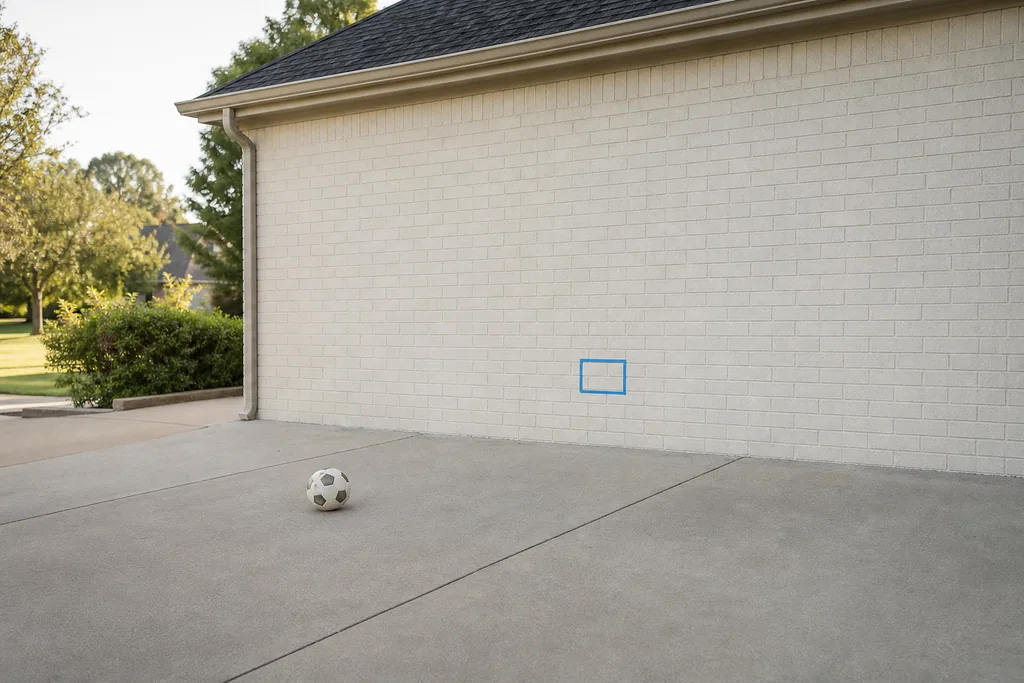
Most home practice needs three things: a ball, a wall and some open ground. As our drill guides put it, “All you need is a soccer ball, a sturdy wall, and a safe, flat area.” For parents, the word that matters most is *safe*. Spend a few minutes checking the space once, and safe soccer practice at home becomes the easy part.
Check the wall
A garage wall, brick wall, or dedicated rebound wall can work. Before the first pass, look for:
- windows, doors, lights or vents that a missed pass could reach;
- loose siding, trim or bricks that a ball could knock loose;
- a downspout, meter box or anything else sticking out.
Mark the target with tape or chalk, low on the wall and away from anything breakable. Most passing drills keep the ball on the ground, so a low target suits them.
Check the ground
The ground matters more than most people think. Walk it in the shoes your child will wear.
- Flat and even, with no holes, roots or sprinkler heads.
- Dry. Wet concrete and wet grass both get slippery.
- Clear of toys, tools and garden hoses.
Grass is softer if someone falls. Concrete gives a truer bounce. Either one works if it’s flat and dry.
Check what’s around the space
Think about where a missed ball will go. A driveway that slopes toward the street needs a clear rule: a ball that rolls into the road stays there until an adult gets it. Agree on that before the first session.
Keep younger kids and pets out of the area while drills are running, and be extra careful with shooting. Our guide to setting up a portable goal covers shooting safety in more detail.
Make it easy to use
The safest space is also the one your child will actually use. Keep the ball, a few cones and the tape for the target in one bin by the door. If setting up takes a minute, practice happens more often. Our guide to building a home training corner has more ideas.
Set the rules together
Kids follow rules they helped make. Before the first session, agree on a few simple ones together:
- Only kick toward the target.
- Stop if anyone walks into the space.
- A ball that goes over the fence or into the road waits for an adult.
- Put the gear back in the bin when you’re done.
Write them on a card and tape it inside the garage. Older kids can help younger brothers and sisters remember them.
Think about light and weather
Practice is safer when your child can see the ball clearly. Late evening light fades fast, and a dark ball against a dark wall is hard to track. If sessions run into the evening, move them earlier or pick a spot with good outdoor lighting.
On hot days, practice in the cooler part of the day and keep water close by. After rain, wait until the ground is dry, or move to a covered area like an open garage with plenty of clear space.
A quick check before each session
- Is the ground dry?
- Is anyone behind the target or near the street?
- Is the ball pumped up? A soft ball comes off the wall at odd angles.
Then let them play. Basic Two-Touch Wall Passing is a good first drill, and the full drill library lets you pick by skill, equipment and level.