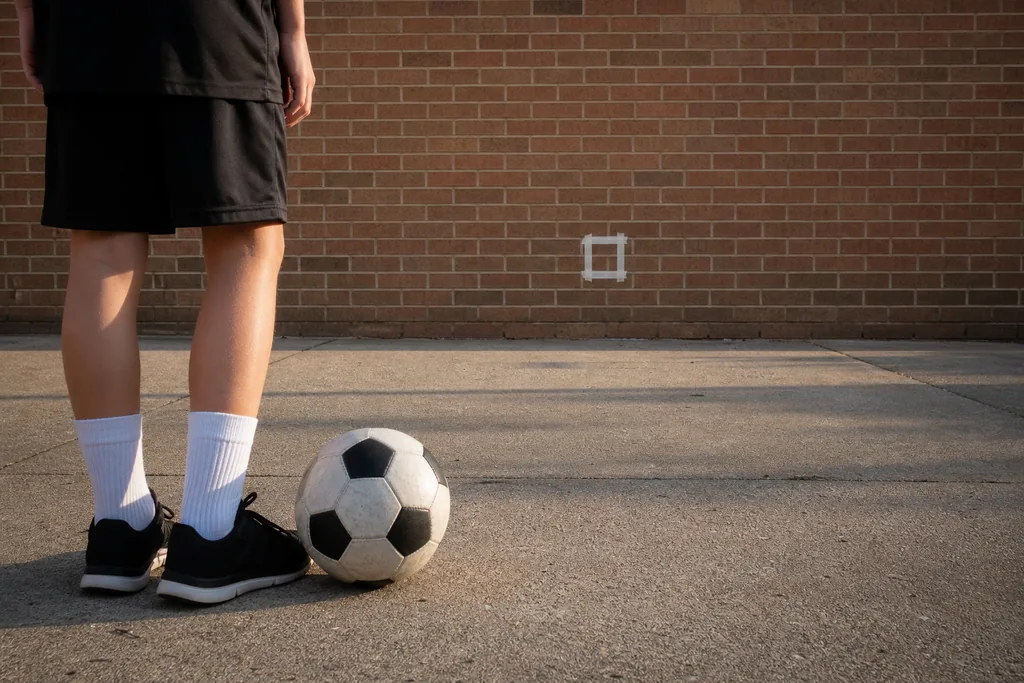
Almost every player has one foot that feels sure and one that feels clumsy. The clumsy one is slower, less accurate and a bit embarrassing, so it’s easy to avoid it. Weak foot soccer training works best when you stop expecting quick results and start stacking up small, steady reps. Do a little most days, and the ball slowly stops feeling strange on that side. This article shows you where to begin and how to keep your cool while it happens.
Why the weaker side feels so awkward
Your weaker foot isn’t broken. It has simply had far fewer touches. Every time you picked your favorite foot in a game or in the yard, that foot got another easy rep and the other one waited. The gap comes from practice, which means practice can close it. That’s good news, because you get to decide how many touches each foot gets from now on.
Start smaller than feels necessary
Skip the big shots at first. Begin with soft passes using the inside of the foot, close to a wall or rebounder, where a clean contact is easy to feel. Alternating Feet Wall Passing is a great place to begin because each foot gets a turn. The rebounder version works the same idea with a net. Stay close until most of your weak-foot passes come back straight. Then take one step back.
Give that foot its own part of every session
- Open with it. Use the first few minutes, while you’re fresh, for weak-foot passes only.
- Run one-foot rounds. In dribbling drills such as One Foot Dribbling, spend a whole round on the weaker side.
- Receive with one, pass with the other. Let your strong foot control the ball and your weaker foot send it back.
- Finish with it later. Once passing feels steady, try Weak-Foot Finishing for shooting reps.
What patience looks like on a normal day
Patience doesn’t mean waiting around. It means showing up, doing the reps and not judging each one. Some passes will skid off sideways, and that’s part of the deal. Count the clean ones instead of the bad ones. Compare your weak foot to how it was last week, never to your strong foot. That comparison is unfair, and it only makes you want to quit.
Signs you’re getting somewhere
- You no longer stop the ball just to shift it over to your good foot.
- Your weak-foot passes go straight more often, even if they’re still soft.
- You can keep a rhythm going without a long pause before each touch.
- In a game, you use that foot without thinking about it first.
When it gets frustrating
Frustration usually shows up when you’re tired or rushing. Take a short water break, do a minute with your strong foot to feel smooth again, then go back to the weaker side for a few slow reps. Ending on a good touch matters more than ending on a high number. Our articles on learning from mistakes in practice and confidence on the ball have more ideas for tough days.
A two-week starter plan
- Days 1 to 4: five minutes of soft weak-foot wall passes from close range.
- Days 5 to 8: add a round of one-foot dribbling on the weaker side.
- Days 9 to 12: take a step back from the wall and alternate feet.
- Days 13 and 14: try a few weak-foot shots and note how many hit the target.
Keep the rest of your session the same. You can browse more ideas in our passing drills, then pick a few that let each foot share the work.