The surface you practice on changes what you should wear. Shoes that grip well on a lawn can slide around on concrete, and the other way around. Picking soccer shoes for backyard training doesn’t have to be complicated or expensive. You mostly need to match the bottom of the shoe to the ground under it. This guide walks through the most common home surfaces and what tends to work on each.
Why the surface matters
Your shoes are what connect you to the ground. When the grip is right, you can stop, turn and plant your standing foot with confidence. When it’s wrong, you either slip or feel stuck. Both make drills harder and less fun. A quick look at where you’ll train is the first step.
Natural grass
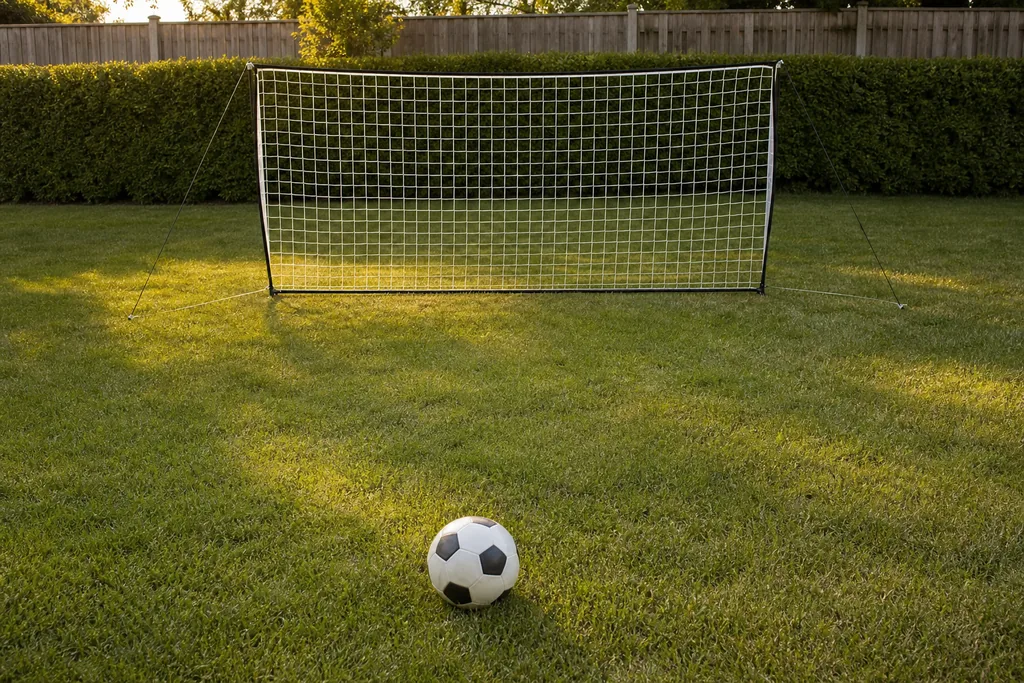
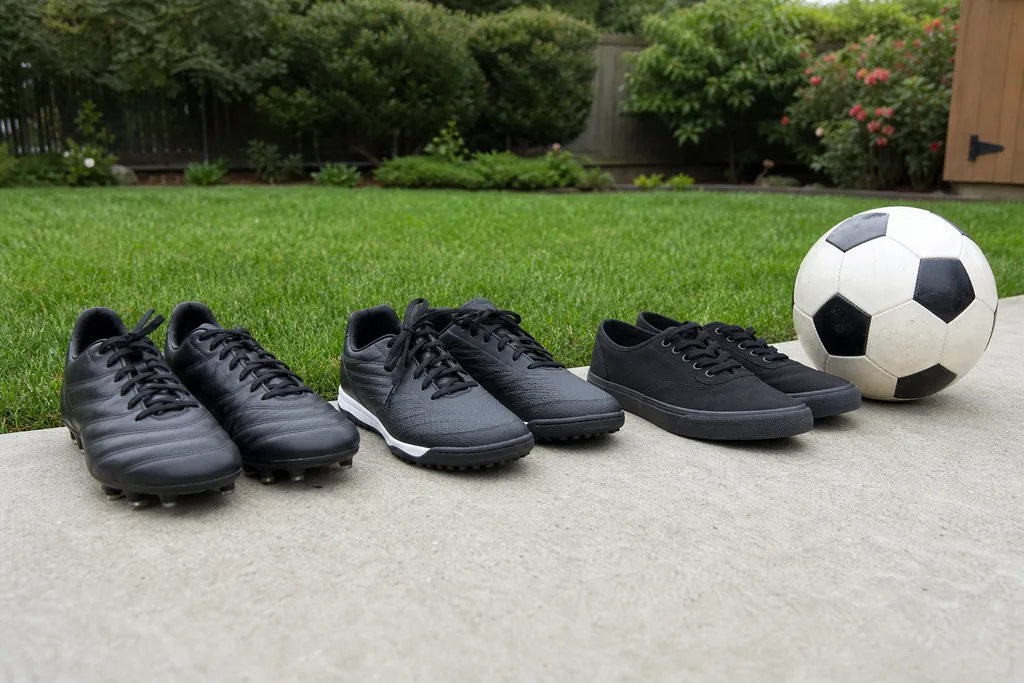
On a firm lawn, regular soccer cleats with molded studs give you good grip for turning and striking the ball. If the grass is short and dry, flat training shoes can also work for passing and dribbling drills. Wet or freshly cut grass gets slippery, so cleats are usually the safer pick on those days. Walk the area first and look for holes, sprinkler heads or soft patches.
Artificial turf
Turf shoes have a flat sole covered in small rubber nubs. They grip well on short artificial grass without catching. Some players wear cleats made for turf instead. Large, long studs aren’t a good match for short turf, since they can grab the surface when you twist. If you share a turf space, check whether there are rules about footwear.
Driveways, patios and garage floors
Hard surfaces need a flat, grippy rubber sole. Sneakers or turf shoes both work. Leave the cleats inside: studs on concrete slide around and wear down quickly. Keep an eye out for loose gravel, sand, oil spots and puddles, which can all make a smooth surface slick. Our guide to a safe space for home training has more on choosing the spot itself.
Getting the fit right
- Shoes should feel snug around the heel with a little room at the toes.
- Try them on with the socks you’ll practice in.
- Wear new cleats for a few short home sessions before a game.
- If a shoe rubs or pinches, swap it out instead of pushing through.
Kids grow quickly, so check the fit every few months.
Socks and shin guards
Soccer socks are longer and usually a little thicker than everyday socks, which helps shoes fit the way they should. For most solo drills at home, shin guards are optional. Put them on whenever you practice tackles or play small games with a sibling or friend, since that’s when legs get kicked. Wearing them at home now and then also helps them feel normal before a game.
Looking after your shoes
Knock mud and grass off after each session while it’s still soft. Let wet shoes dry in open air rather than next to a heater. Keep them in your gear spot so they’re ready next time. Our article on storing your training gear explains how to keep everything in one place.
Matching shoes to drills
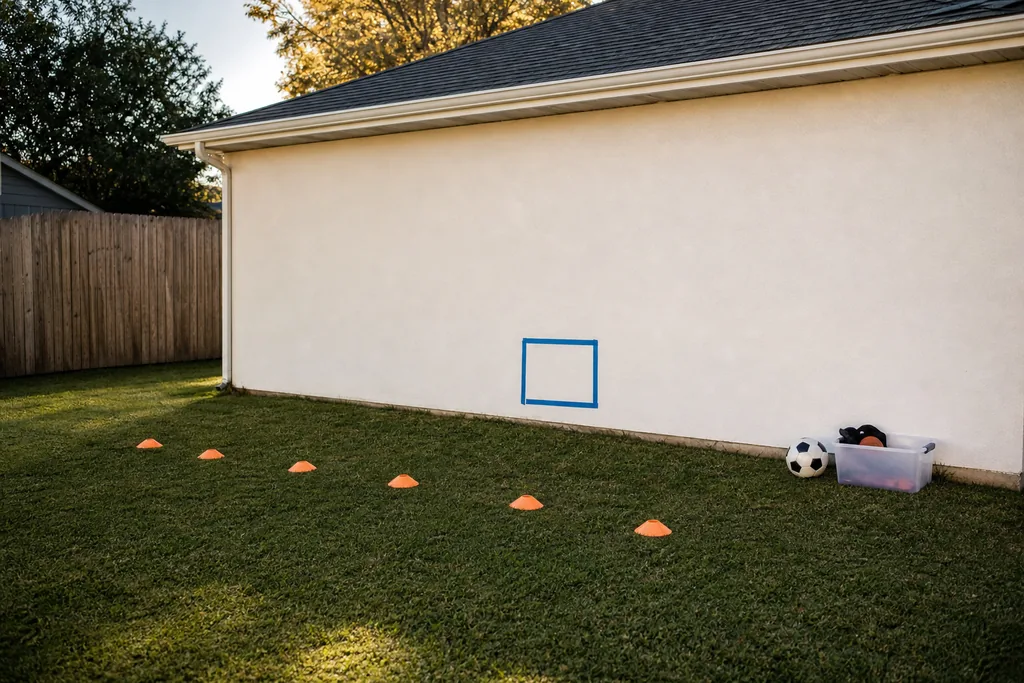
Quick-feet drills such as Toe Taps work well on a driveway in flat shoes. Wall passing often happens on concrete too, so read up on what you need for a home kick wall. For longer shots and turns on grass, cleats help. You can find more ideas in our footwork drills.