Team practice is the part everyone sees. There’s a coach, teammates and a plan already made for you. What happens between those sessions is quieter. Nobody counts your wall passes on a Tuesday evening or notices when you do an extra set of turns. Practicing soccer on your own can feel like it doesn’t matter. It does, and this article explains why.
Team time is shared time
At team practice, the ball is shared among a whole squad. You spend time waiting in lines, listening to instructions and watching others take their turn. That’s all useful, but your own feet may only touch the ball now and then.
At home, every touch is yours. A short session against a wall gives you a steady stream of passes and first touches without waiting for anyone. Read why get touches on the ball every day for more on that idea.
You get to work on your own gaps
A coach plans for the whole team. You know better than anyone what you personally find hard. Maybe it’s your weaker foot, or turning under pressure, or controlling a high ball. Solo practice is your chance to spend time on exactly that.
For example, if your left foot needs work, Weak-Foot Finishing gives it a full session of its own. If turns are the issue, try Receive, Turn, and Pass.
Small sessions stack up
One quiet session won’t change much on its own. The value comes from repeating it. A little practice on several days a week builds into a lot of touches over a month, and your feet start to remember what to do. You may not notice the change from one day to the next. Your teammates and coach often notice it first. A pass that used to wobble now arrives firm, or a turn that used to need three touches now takes one.
Staying honest without a coach
With nobody watching, it’s easy to cut corners. A few habits help:
- Count your reps. Write down passes, hits or runs so you can’t fool yourself.
- Do the hard foot too. Don’t skip the weaker side because nobody would know.
- Finish the set. If the drill says 20 passes, do 20.
- Be fair with your scores. A near miss is a miss.
Making it a habit you keep
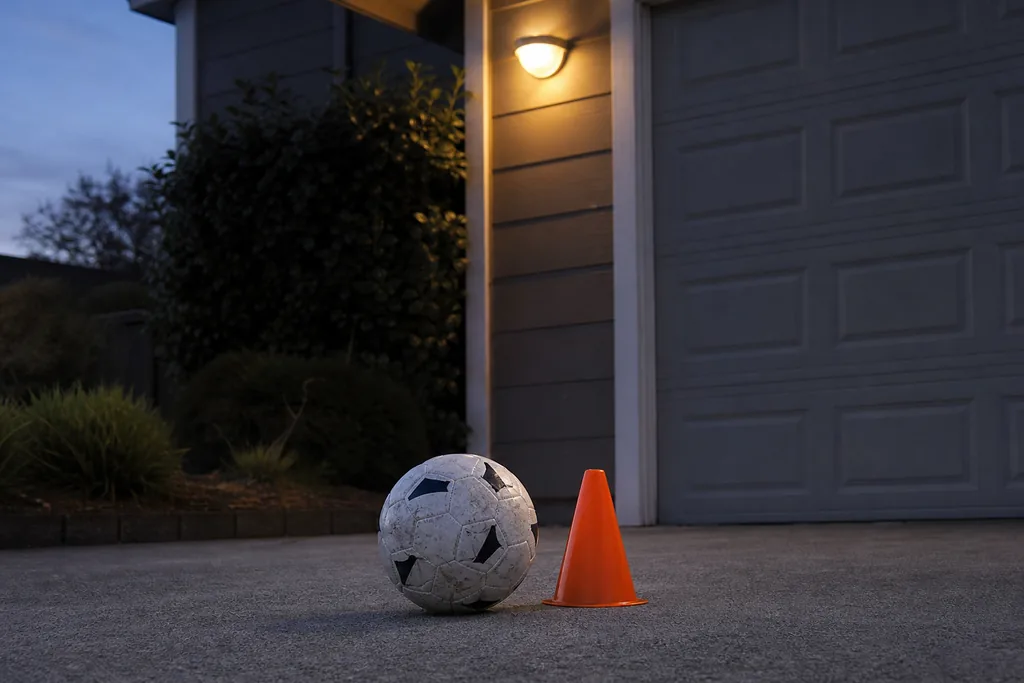
Pick a regular time, like straight after school or before dinner, so practice becomes part of the day rather than something you decide on each time. Keep the ball and cones somewhere easy to grab. The fewer steps between you and the first touch, the more likely you are to start. Our article on making practice a habit has more ideas, and a ready-made plan from our weekly challenges takes the guesswork out of what to do.
When it feels pointless
Some days you’ll feel like nothing is improving. That’s normal. Look back at your notes from a few weeks ago and compare. Progress at home is slow and quiet, which is exactly why it’s easy to miss. A bad day doesn’t erase the work from the days before it. Turn up for the next session anyway, even if it’s a short one. If a session goes badly, learning from mistakes in practice can help you reset.
The payoff on game day
The work you do alone shows up when it counts: a clean first touch under pressure, a pass with the foot you used to avoid, a calm turn away from a defender. Nobody saw you earn it. You’ll know, though, and that quiet confidence on the ball is worth every session.