Team practice might happen twice a week, or not at all in the off-season. If that’s the only time you work on your game, you’re waiting on someone else’s schedule. When you own your soccer training plan, you get more touches, because you don’t need anyone’s permission to practice. Owning your plan means choosing what to work on, deciding when you’ll do it, and checking whether it’s working. Here’s how to start.
What ownership actually means
It doesn’t mean ignoring your coach or doing everything alone. It means treating your improvement as your job. Your coach gives you ideas and feedback. You take those ideas home and put the time in. The ball, a wall and a little space are all you need to get going.
Pick one or two skills to own
Trying to fix everything at once leads to fixing nothing. Choose one or two skills for the next few weeks, such as first touch and dribbling with your weaker foot. Browse our skill areas to see the options. If you’re not sure where you fit, the guide to choosing drills by age and level can help you find a fair starting point.
Build a plan you can follow
A plan only works if it fits your real week. Look at your school days, team nights and rest days, then pick a few short slots that are realistic.
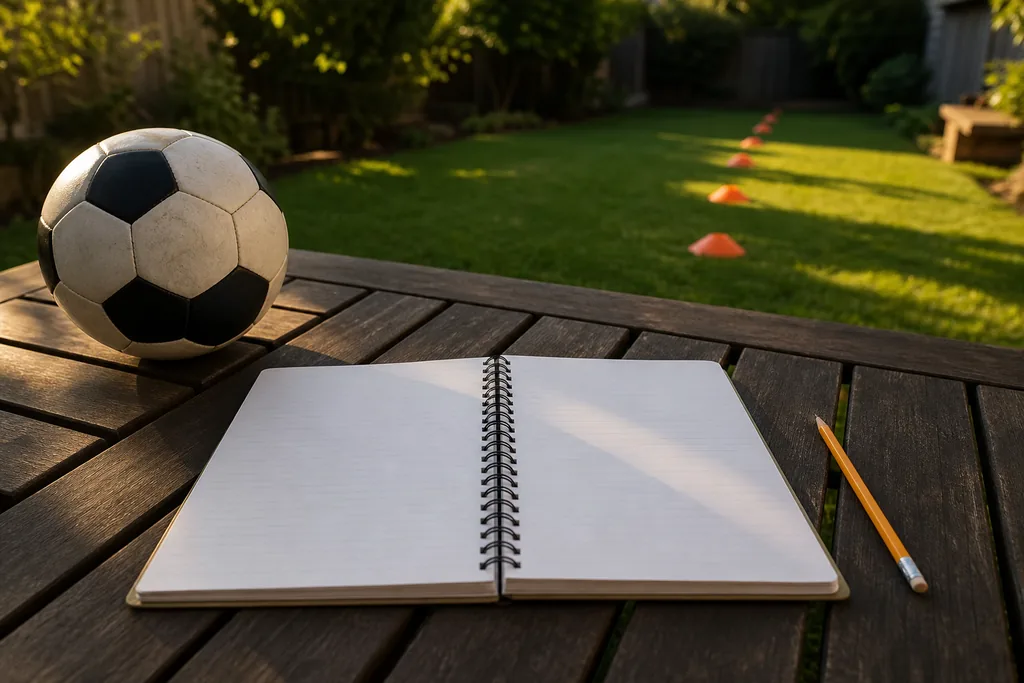
- Write down which days you’ll train and for how long.
- Choose two or three drills for each skill you picked.
- Add one of our weekly challenges to give the week a clear target.
- Leave at least one day off for rest.
If you like numbers, setting a weekly touch goal gives you something simple to aim for.
Use team practice as feedback
Pay attention to what goes wrong at team practice and in games. Did your passes keep drifting wide? Did you lose the ball when someone pressed you? Those moments are clues. Write one down after each practice and turn it into something to work on at home. Over time, your home sessions start fixing the exact problems you see on the field.
Show up when nobody’s checking
The hardest part of owning your plan is doing it when no one is asking. Some days you won’t feel like it. On those days, do a shorter session instead of none. Our article on practicing when nobody is watching has more on building that kind of self-drive.
Ownership includes asking for help
Owning your plan also means knowing when to ask. Ask your coach what one thing would help you most. Ask a parent to pass a ball with you or feed you a few throws. Asking good questions is part of taking charge, not a sign you can’t do it.
What a sample week could look like
Here is one way a player with two team practices might lay out a week:
- Monday: fifteen minutes of wall passing, alternating feet.
- Tuesday: team practice, then write down one thing to fix.
- Wednesday: twenty minutes of cone dribbling on the skill you picked.
- Thursday: team practice.
- Friday: rest, or a few relaxed juggles.
- Weekend: one longer session built around the note from Tuesday.
Your week will look different, and that’s fine. What matters is that you wrote it and you follow it.
Check in every few weeks
Every three or four weeks, look back. What got better? What still feels hard? Keep the skills that need more time, swap out the ones that feel steady, and adjust your plan. Ideas for tracking progress over a season can make that review easier.